Streamlining Valley's branch customer verification

Across 230 branches, Valley's bankers were navigating a fragmented, paper-heavy onboarding process, one that required manual data entry, redundant handoffs, and significant back-office reconciliation. Staff were exposed to risk at every step and customers waiting longer than necessary. Valley engaged to modernize the platform end-to-end, replacing slow, error-prone workflows with a streamlined digital experience built for bankers and customers alike.

Role UX Design Manager (UX Designer, Writer)

Team UX Researcher · Jr. UX Designer

Partners Product · Engineering

Team Deliverables High-fidelity · Content

Tools Figma · Maze · Miro

Timeframe 6-8 months

Company In-house

The Problem

KYC (Know Your Customer) is a federal regulatory requirement that financial institutions use to verify customer identities during onboarding to prevent fraud, money laundering, and identity theft.

Valley's account opening platform shipped with an out-of-the-box KYC solution that created significant comprehension challenges for branch bankers. Errors, incomplete submissions, and manual overrides became routine, driving up back-office corrections and slowing account approvals. The experience needed to be redesigned to reduce risk and help bankers execute with confidence.

View final design →

What Success Looks Like
  1. Reducing average KYC verification and account approval time
  2. Increasing first-pass application accuracy with fewer errors and overrides
  3. Reducing compliance exceptions, audit findings, and policy deviations
  4. Improving banker confidence and adherence during verification
"How can we improve the KYC verification process to reduce banker errors, ensure compliance, and support banker confidence?"
Pain Points

Bankers misinformed & delayed onboarding

Abandoned applications sent wrong notifications to bankers and delayed onboarding, causing friction in routine openings.

400+ mishandled applications

Bankers weren't properly declining applications with failed customer verifications, triggering back-office corrections and audit risk.

Bankers left guessing

Color-coded indicators and unclear next steps meant verification was handled inconsistently across branches.

Opportunities

Improve compliance

Improve regulatory compliance by boosting associate confidence and adherence.

Reduce banker errors

Minimize operational risk and improve application accuracy by reducing errors caused by manual verification overrides.

Drive banker-lead improvements

Make informed decisions based on direct banker feedback.

Step One

Moderated interviews

The account opening platform's design was heavily shaped by the technical constraints of two integrated systems: Alloy, which handled fraud and compliance checks, and Terafina, the account opening platform itself.

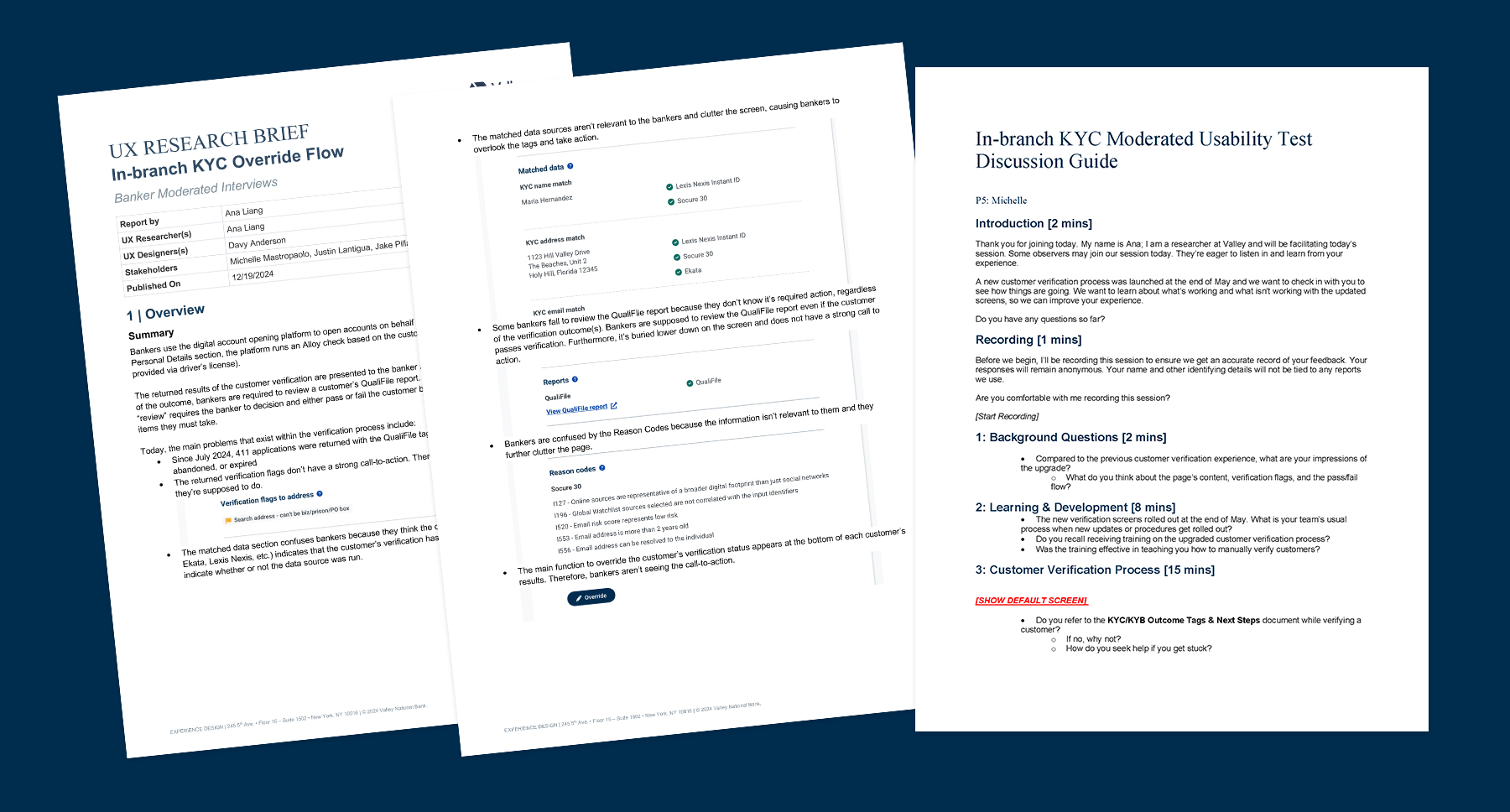
Knowing the out-of-the-box solution wasn't optimized for banker workflows, I directed our UX Researcher to conduct interviews with a pilot group of branch associates to surface exactly where the experience broke down.
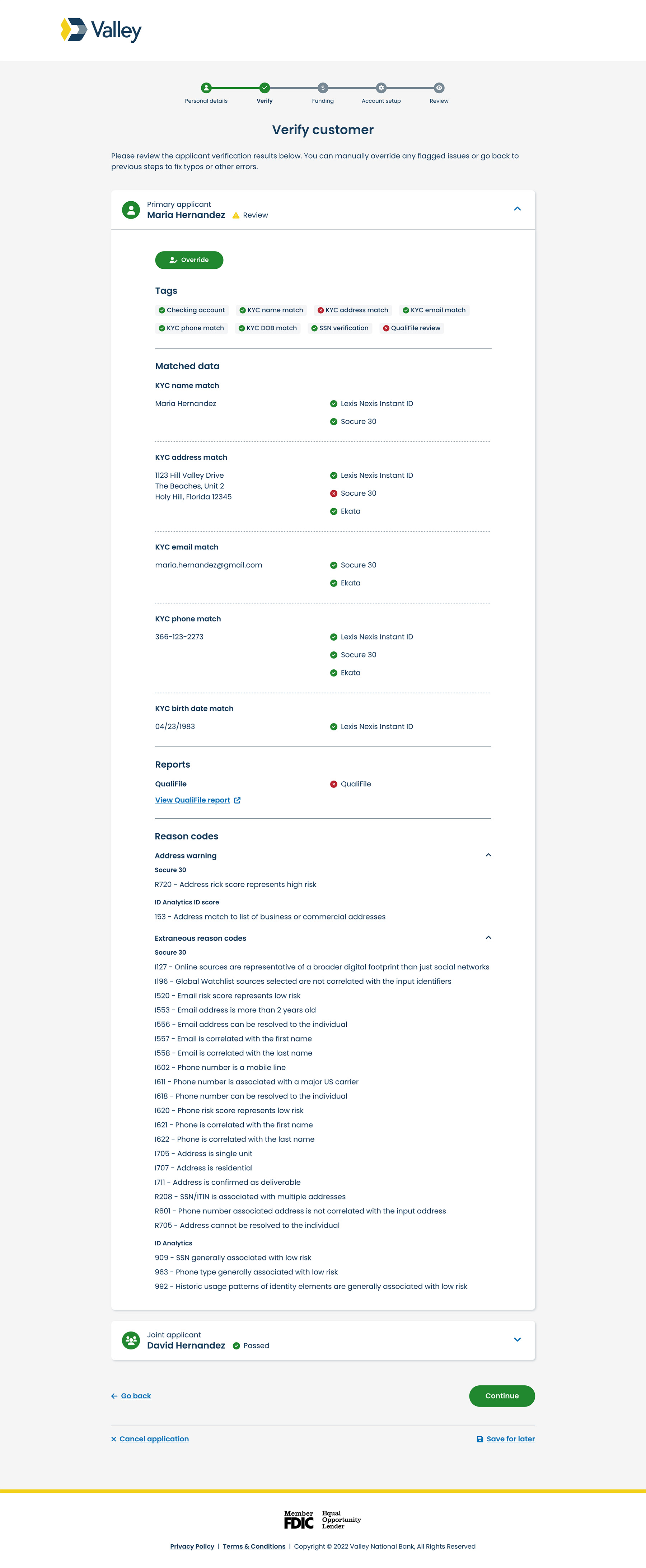
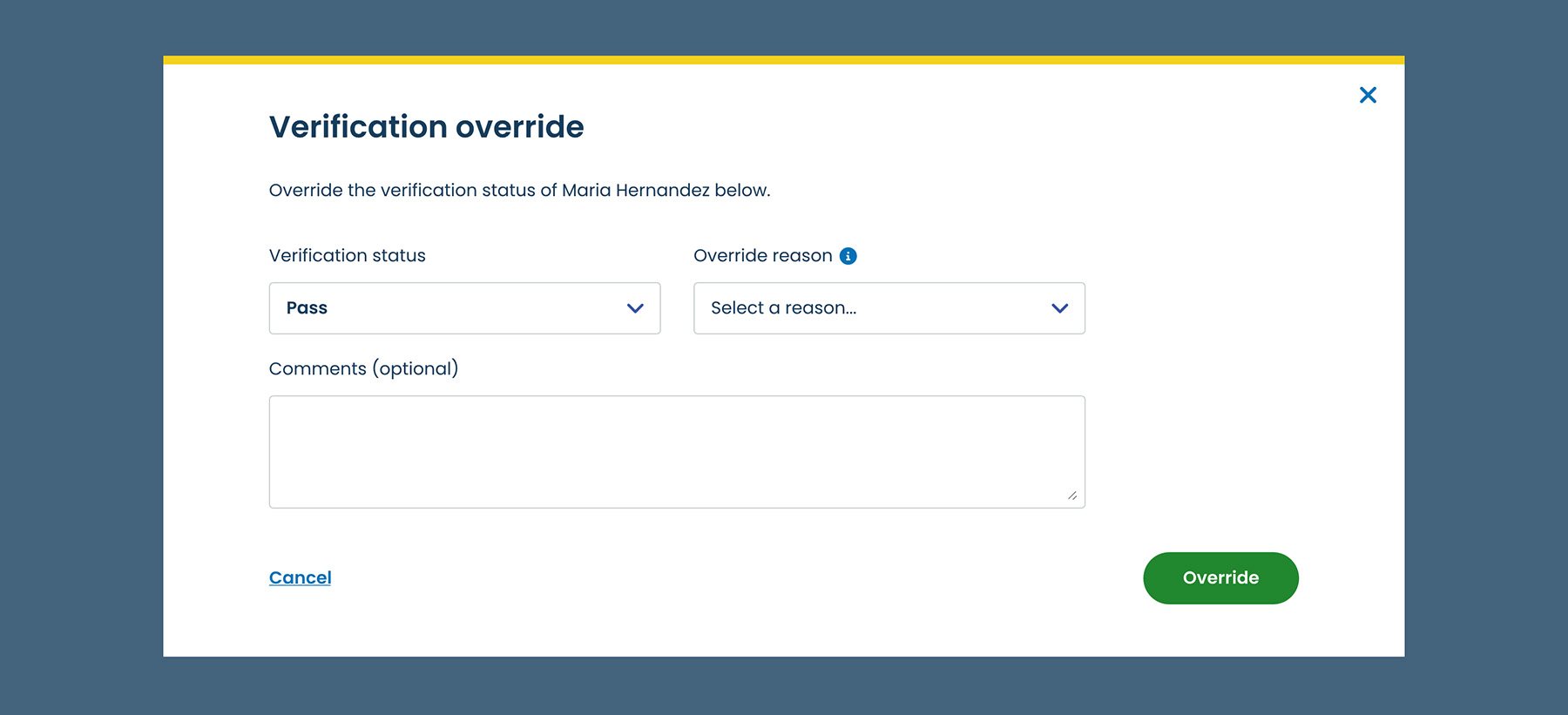
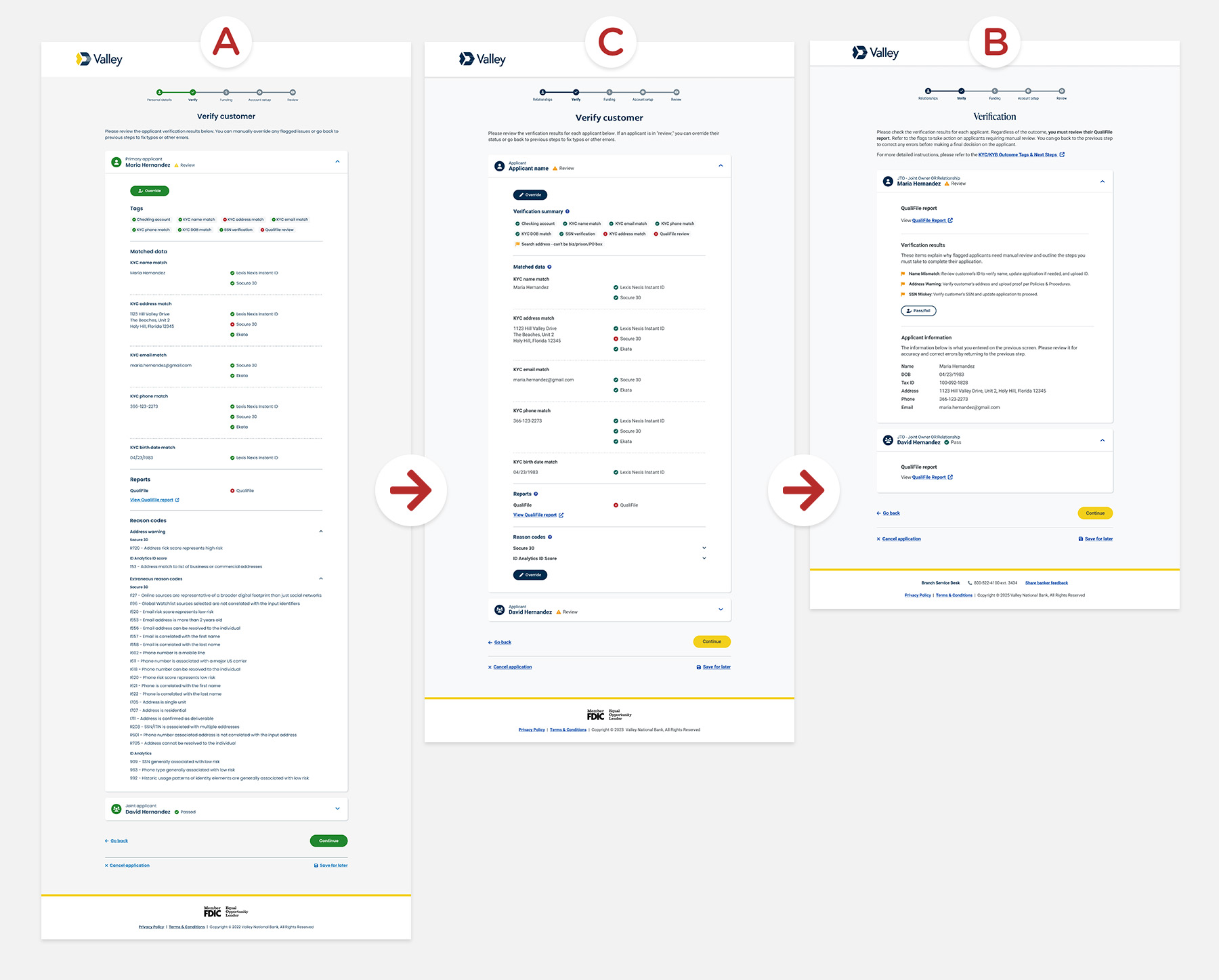
The Original Design

What We Learned

The research pointed to a clear theme: bankers could move through the process, but lacked the confidence and clarity to act correctly.

  1. Workflow Adjustment: Legacy power users struggled to adapt from familiar manual workflows to the new digital process.
  2. Unintuitive Labels: Reason codes and section labels were technical and unintuitive, leaving bankers unsure how to respond.
  3. Missing Guidance: Verification tags were visible, but provided no guidance on what to do next, especially during manual reviews.
  4. Divided Attention: Bankers frequently multitask during customer interactions, and the interface didn't account for that reality.
  5. Misread Visual Cues: Color-coded indicators were routinely misread as pass/fail signals rather than system status.
No items found.
Step Two

UX Design Solution

With the findings analyzed, I shifted into execution mode, taking a hands-on role in translating research into design decisions alongside the team.

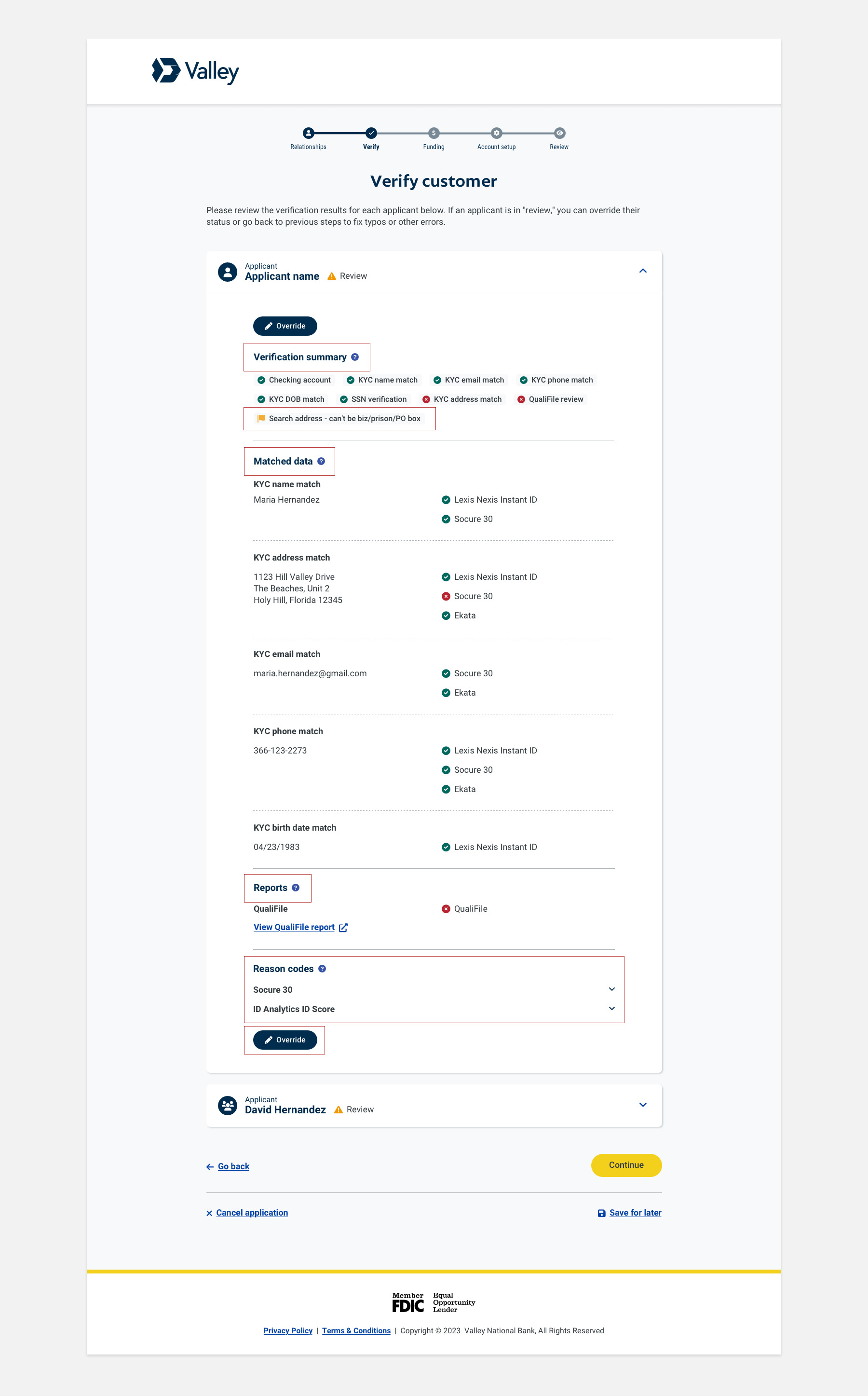
  • Collapsed non-essential reason codes to reduce cognitive load.
  • Rewrote section headers and introduced tooltips to provide inline context.
  • Added a second override call-to-action to the bottom of the screen to avoid overlooked interactions.
  • Wrote and added instructional verification flags to the Verification Summary to provide clear, actionable next steps.

Design updates were released into production for development.
No items found.
Step Three

Revisiting Design & Content

Despite the initial improvements, bankers were still mishandling applications. With a broader Experience Design team reporting to me by this point, I stayed hands-on, directing UX research and design while functioning as an individual contributor as the UX Writer. The banking retail team escalated feedback at critical decision points:
Stakeholder Feedback
  1. Unclear Calls-to-Action: Bankers understood a manual review was needed but didn't know what to do next, even with verification flags in place
  2. Persistent Visual Misreads: Color-coded Matched Data sources were still being interpreted as pass/fail indicators rather than signals that a data source had run
  3. QualiFile Oversight: Bankers were skipping the QualiFile report entirely, unaware it was required regardless of the verification outcome
  4. Thin Override Comments: Bankers weren't providing sufficient detail when documenting pass/fail decisions during the override process
  5. Incomplete Submissions: Rather than formally declining failed applications, bankers abandoned or canceled them, triggering incorrect customer notifications
  6. Irrelevant Information: MatchedData and Reason Codes distracted bankers from the actions that actually mattered
Design Response
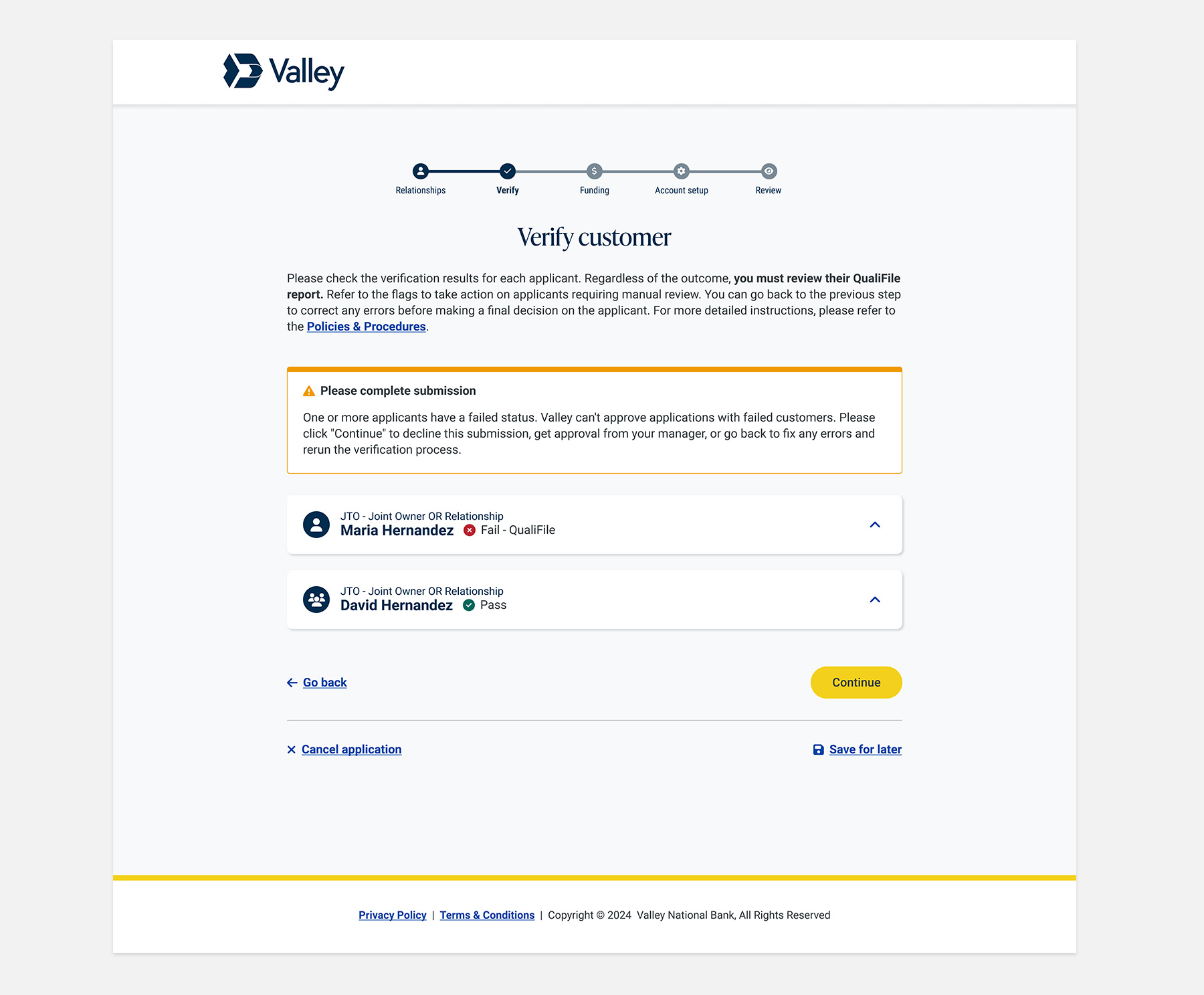
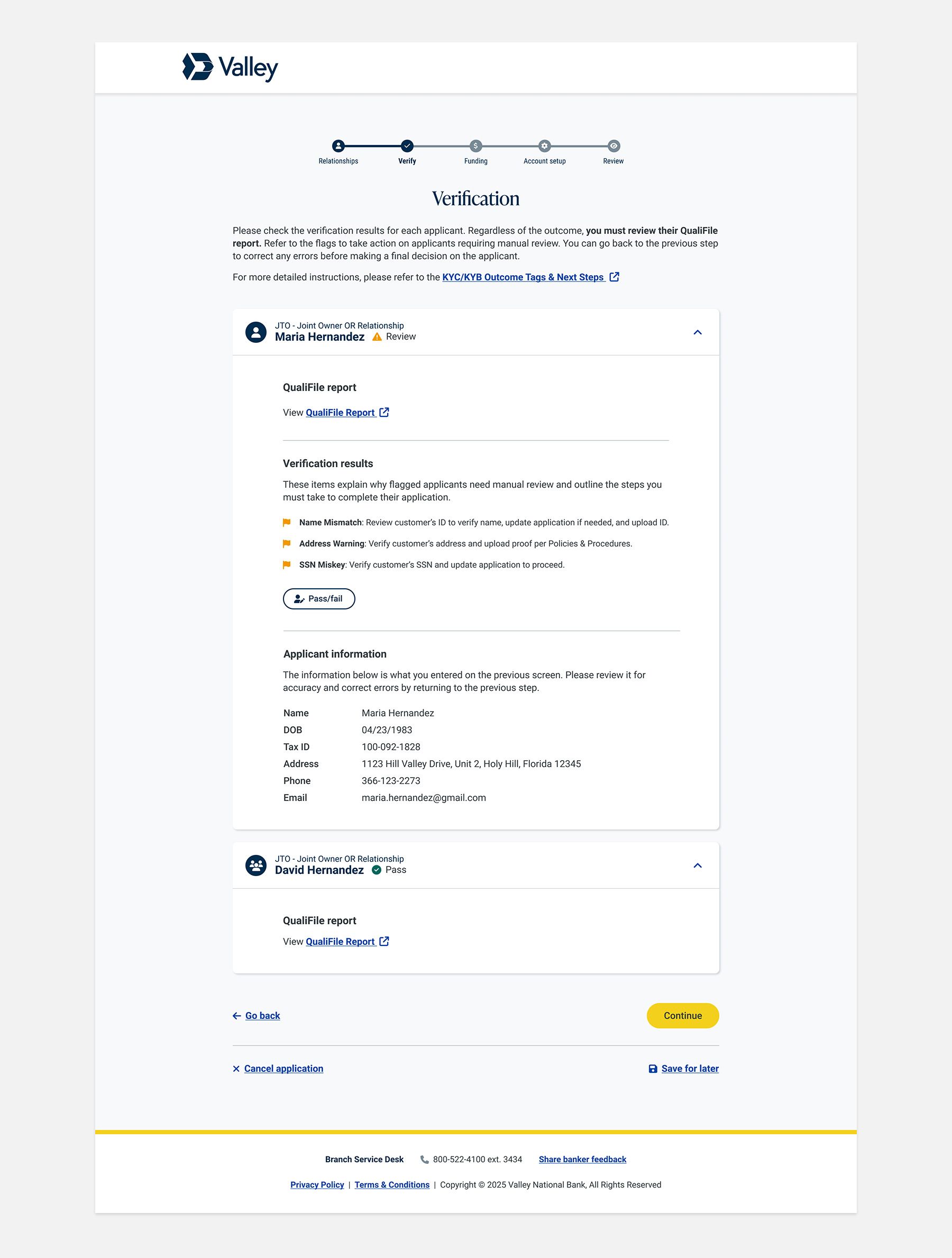
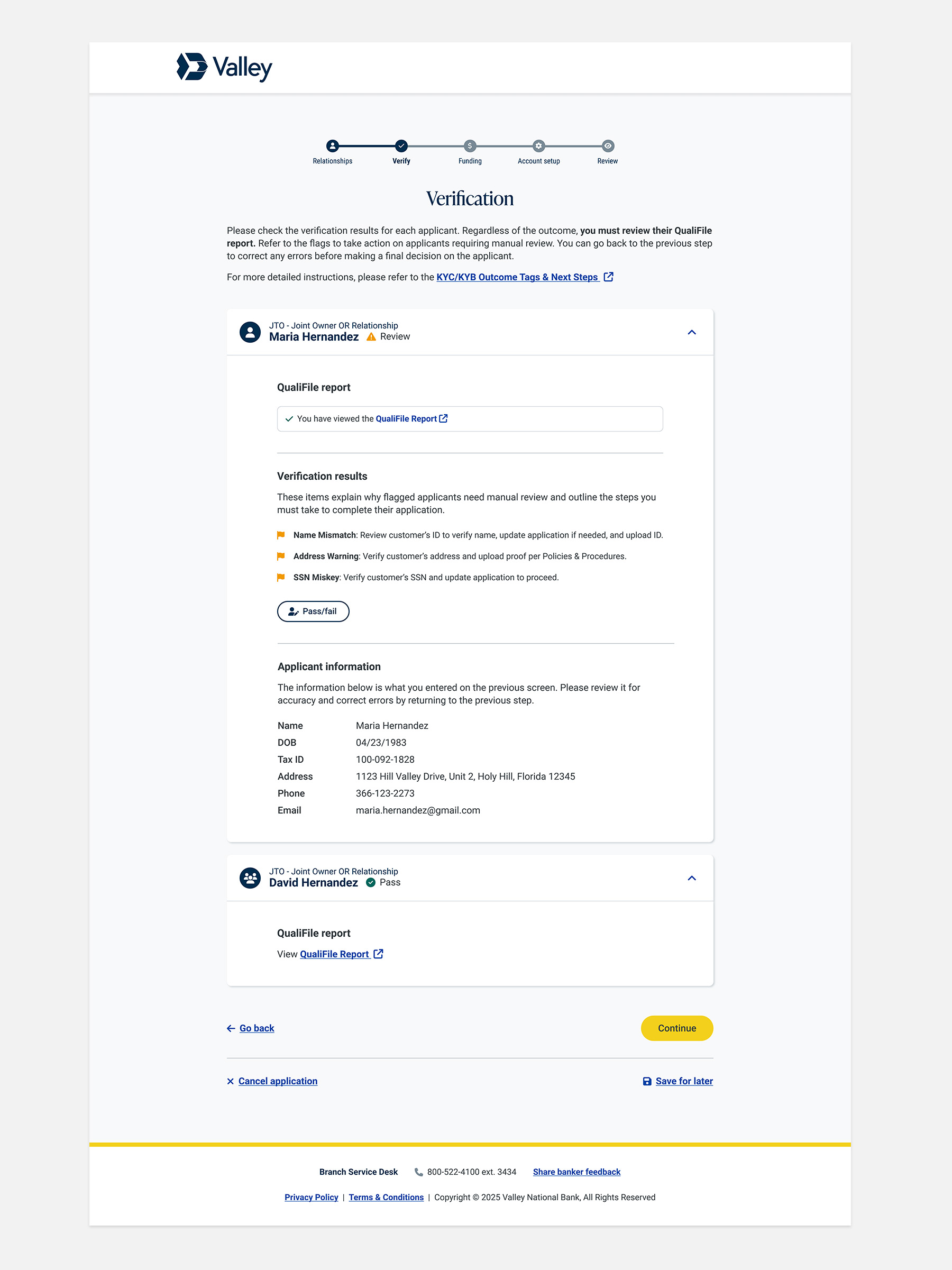
  • Prioritized QualiFile: Positioned the QualiFile report at the top of the screen with a required interaction.
  • Sharper Verification Flag Content: Rewrote verification flags with direct, action-oriented instructions.
  • Removed Misleading Indicators: Stripped red and green visual cues from the Verification Results, leaving only the verification flags.
  • Resurfaced Customer Details: Saved bankers having to backtrack in the application to verify if they entered correct data.
  • Simplified the Interface: Removed the Matched Data and Reason Codes sections to eliminate distraction and focus banker attention; joint applicant accordions opened by default.
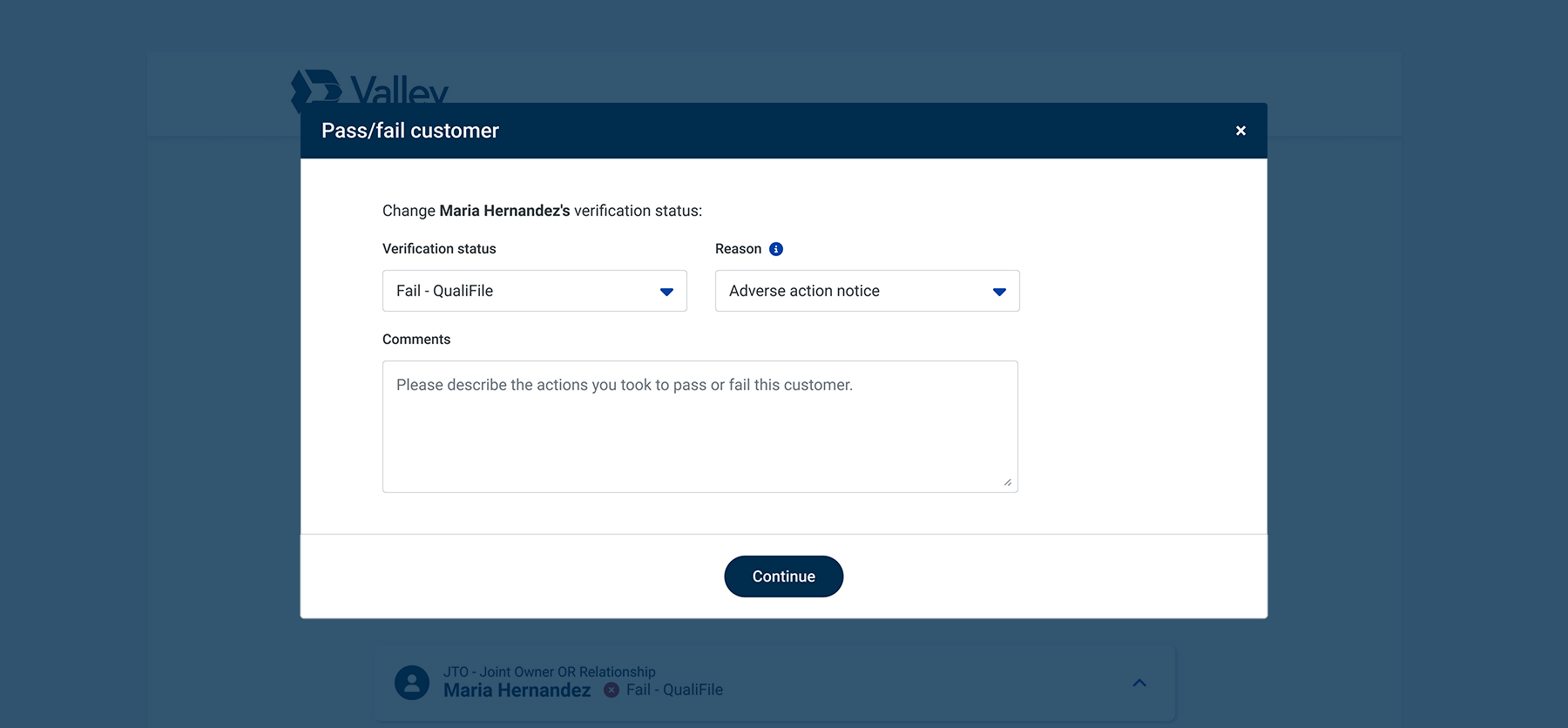
  • Guided Decline Flow: Added an alert prompting bankers to click "Continue" to formally decline an application and close the loop correctly.

View prototype version 2 >

No items found.
Step Four

Usability Testing

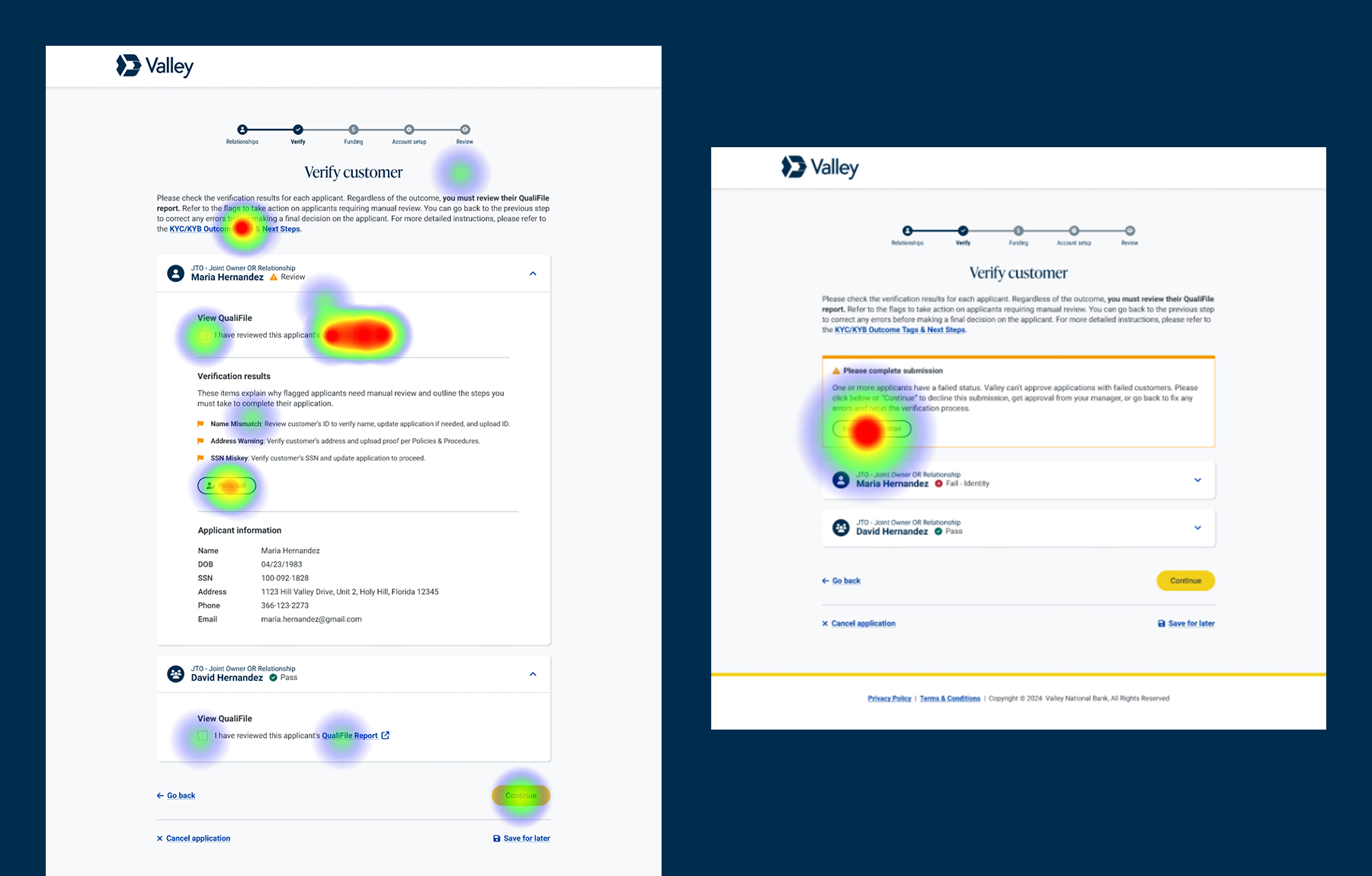
I led the research effort from brief to execution, coaching our junior UX Researcher on how to solicit actionable feedback through moderated usability testing. We recruited branch employees who frequently appeared on the deficiency list, along with Learning and Development associates responsible for banker training.

What We Learned

The updated flow tested well overall, but exposed gaps in step-by-step guidance and flexibility.
  • QualiFile Comprehension: Bankers understood the report's purpose and responded positively to its new placement at the top of the screen
  • Verification Flag Clarity: Flags rated 4.8/5 for clarity, confirming the rewrite landed
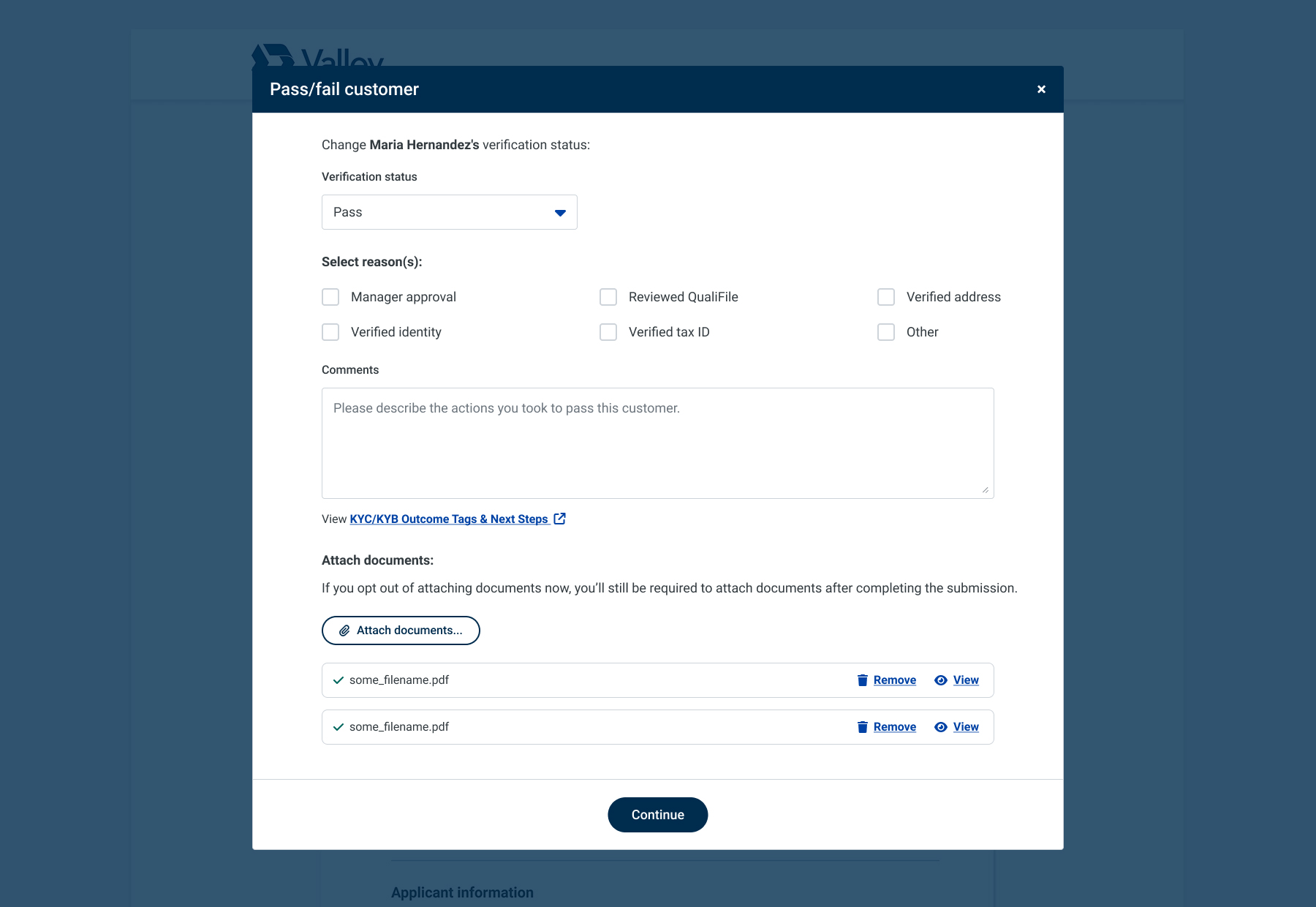
  • Pass Flow: Rated 3.8/5, with requests for document upload during manual review and more granular pass/fail reasons
  • Fail Flow: Rated 4.4/5, though the "Continue to decline" alert still created hesitation
Design Response
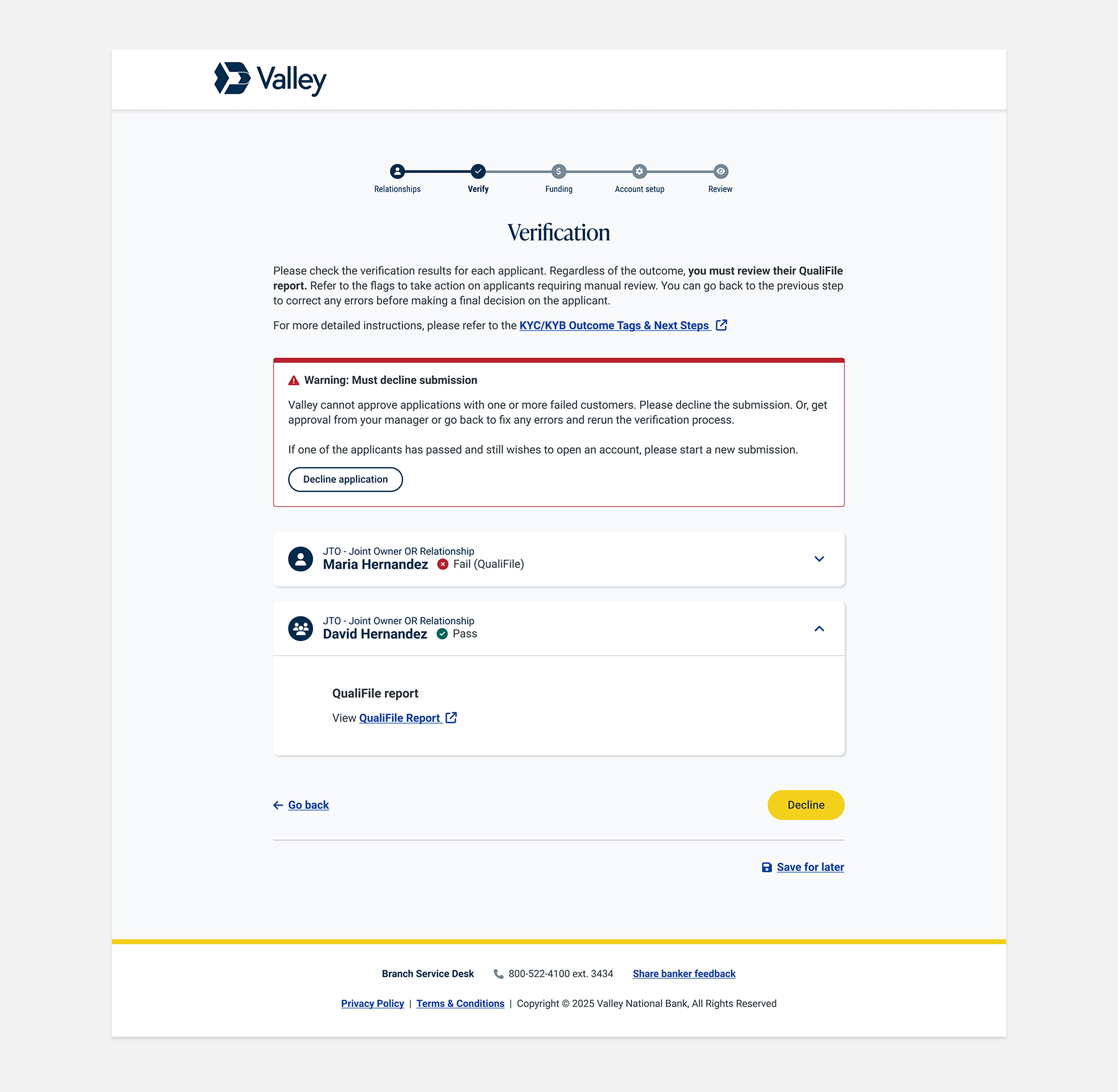
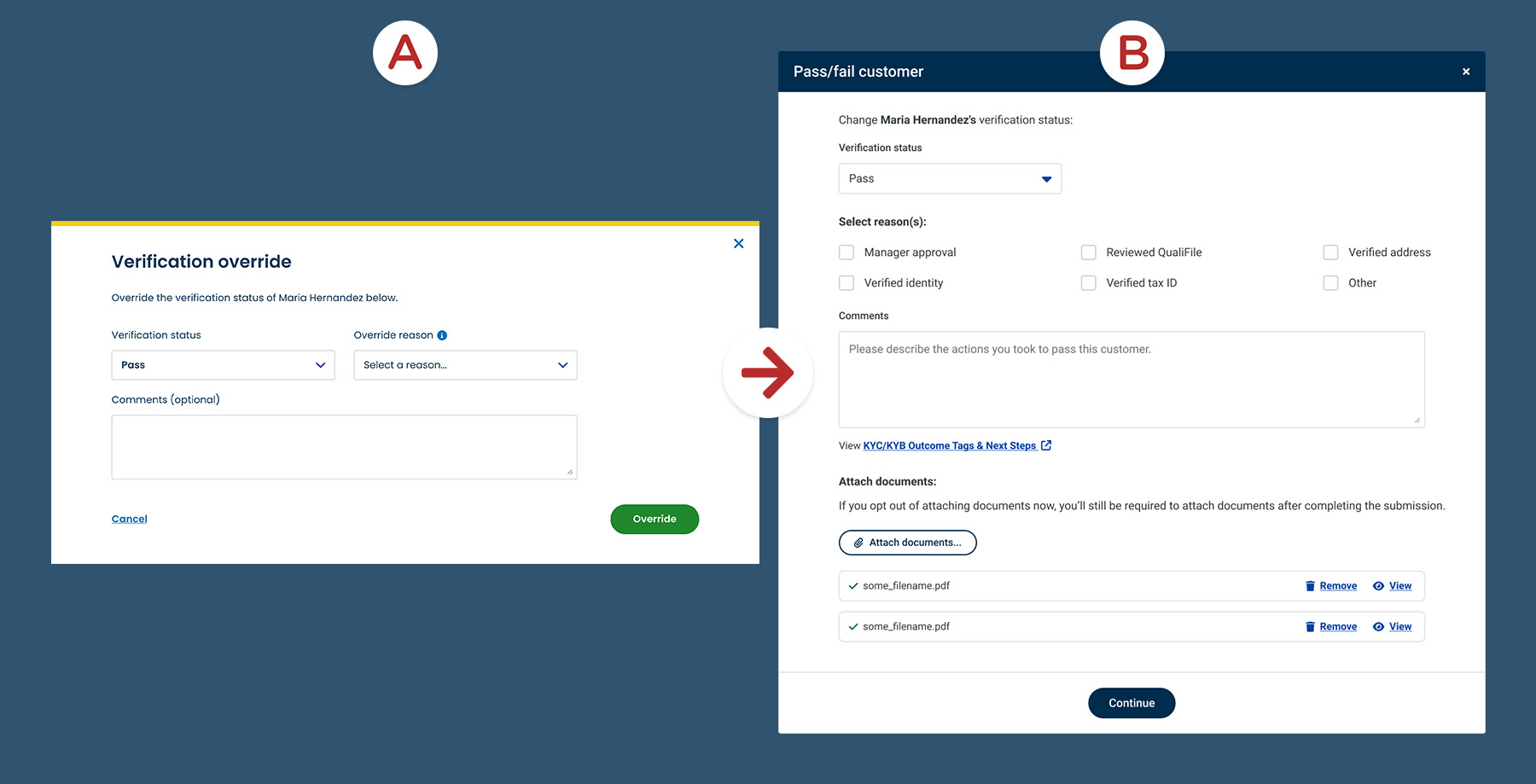
  • Overhauled Pass/Fail Modal: Added step-by-step guidance, enabled document upload, and improved data collection
  • Expanded Default View: Opened all customer accordions by default so bankers could see all action items at a glance
  • Enforced QualiFile Review: Added a checkbox with error handling to track compliance and encourage interaction
  • Rewrote the Warning Message: Made it unambiguous that any failed customer must be formally declined

View prototype version 3 >


No items found.
Step Five

Follow-up Interviews

Compliance monitoring revealed a troubling signal: despite two rounds of research-driven redesign, application mishandling was still increasing. The interface had improved, bankers rated it positively, and yet the numbers told a different story.

Rather than accept the data at face value, I oversaw the researcfollow-up interviews to investigate whether the problem was still rooted in design, or somewhere else entirely.
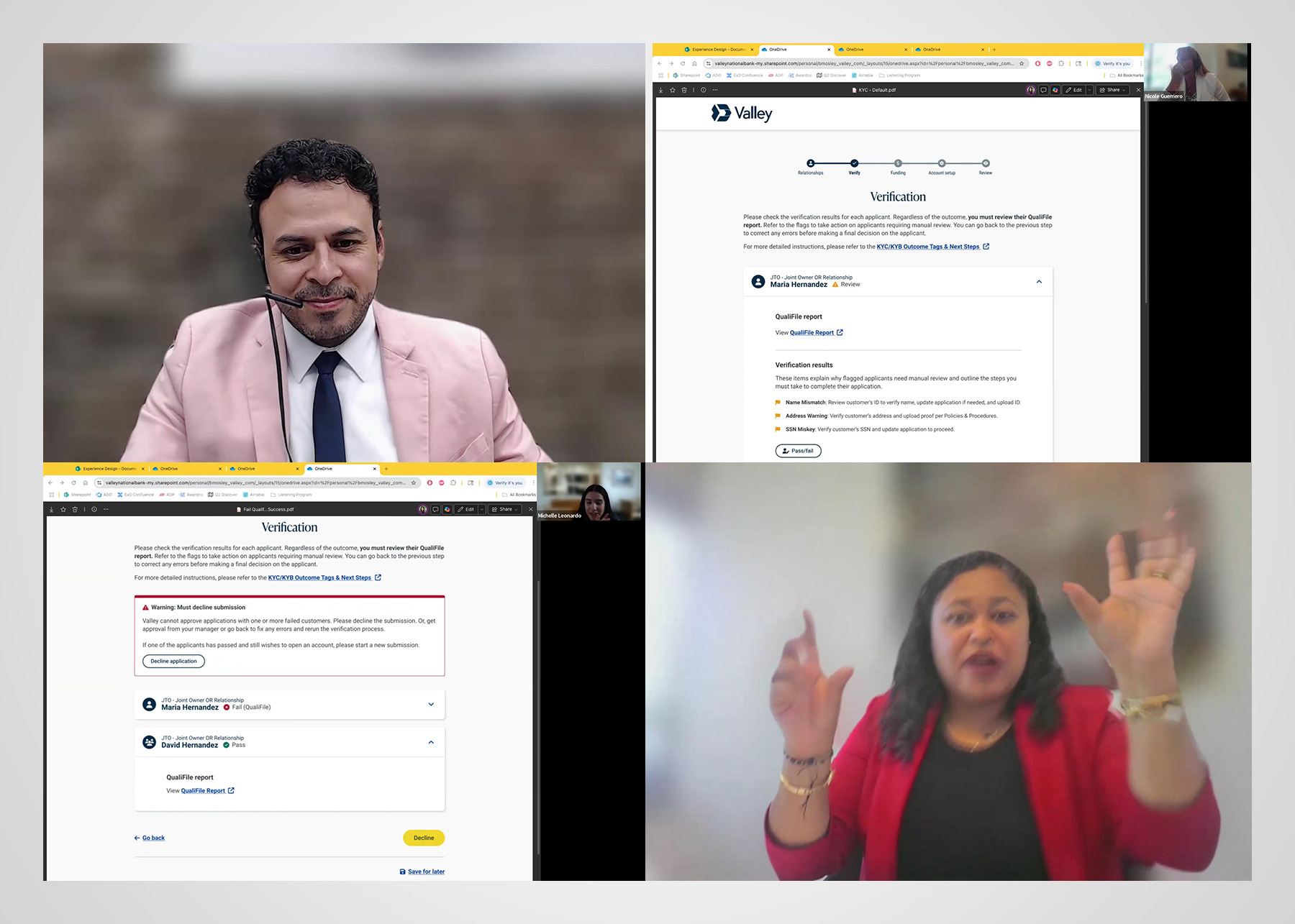


What We Learned
  1. Interface Improvements Landed: Bankers found the verification flags clearer and credited them with reducing errors and improving efficiency
  2. Compliance Tracking Valued: Bankers appreciated that the interface now enforced and tracked QualiFile reviews
  3. Decline Flow Understood: Bankers knew they had to formally decline failed applications to trigger the correct customer communications
  4. Training Was the Gap: Inconsistent onboarding and inadequate support materials left bankers underprepared, regardless of how intuitive the interface had become

The design had done its job. What remained was outside the scope of UX to solve. Our hypothesis pointed to deeper operational factors, including inconsistent training practices and underlying incentive structures, that no interface change could fully address.

We documented our findings and I escalated them to Retail and Learning and Development with a clear recommendation to close the gap through improved training and support materials.
No items found.

Impact

This was a two-year, multi-phase effort to fix a compliance problem that the interface alone couldn't fully solve. As a player-coach, I stayed close to the work across every iteration, directing research and design while serving as UX Writer on key deliverables.

When data showed that behavior still lagged behind the redesigned interface, I led follow-up research that correctly identified training gaps as the root cause and escalated findings to stakeholders. The work improved banker confidence, reduced workflow friction, and drove more consistent, compliant execution at the point of service.

View final design →

Outcomes

↓9 mins

Average reduction in customer wait time during the verification process (as indicated through task duration metrics).

92%

Consistent, compliant execution (as reflected in audit findings, error reports, and compliance checklists).

4.6 / 5

Banker confidence and satisfaction scores, noted with reduced task-related stress.

Learnings & Reflections

Observed vs. stated behavior

What users say they do often differs from what they actually do, underscoring the need for testing.

Limits of UX influence

UX can meaningfully shape behavior within digital systems, but cannot fully control factors outside the interface.