
Brandon W. Mosley · UX Leader

Role UX Design Manager (UX Designer, Writer)
Team UX Researcher · Jr. UX Designer
Partners Product · Engineering
Team Deliverables High-fidelity · Content
Tools Figma · Maze · Miro
Timeframe 6-8 months
Company In-house
KYC (Know Your Customer) is a regulatory process used by financial institutions to verify clients' identities during onboarding and throughout the customer lifecycle. It helps prevent fraud, money laundering, and identity theft.
Significant screen comprehension and usability challenges in the out-of-the-box KYC solution led to increased back-office corrections, onboarding delays, and heightened compliance risks from manual overrides and incomplete documentation. These persistent issues underscore an urgent need for a more intuitive and compliant onboarding experience.
How can we redesign the KYC onboarding flow to improve usability, reduce errors and delays, and ensure compliance, delivering a faster, safer, and more efficient customer experience?
Alloy (the fraud and compliance checks system) and Terafina (the account opening platform) heavily influenced the interface’s design due to their respective functionality.
Knowing Terafina's out-of-the-box solution didn't lend itself to the best user experience, I lead the UX Researcher to test the initial design concept with a pilot group of branch associates.
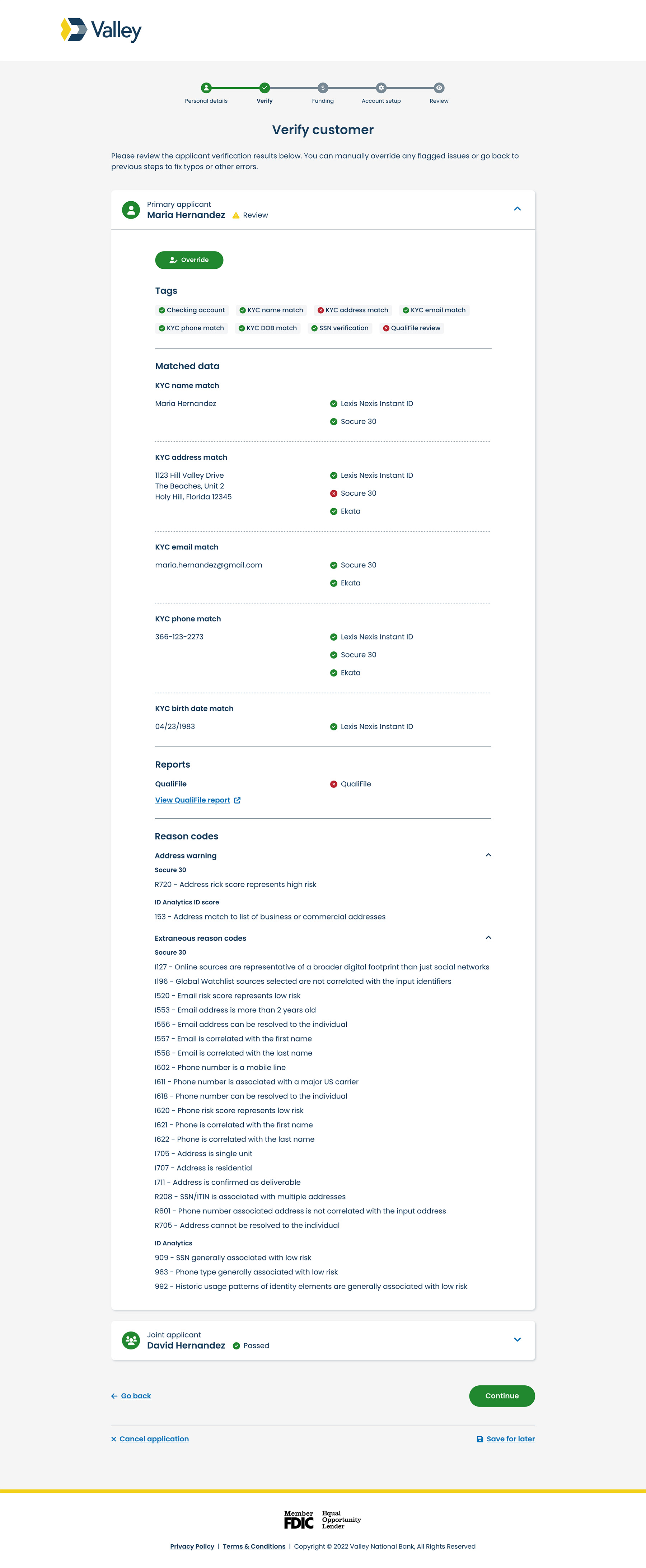
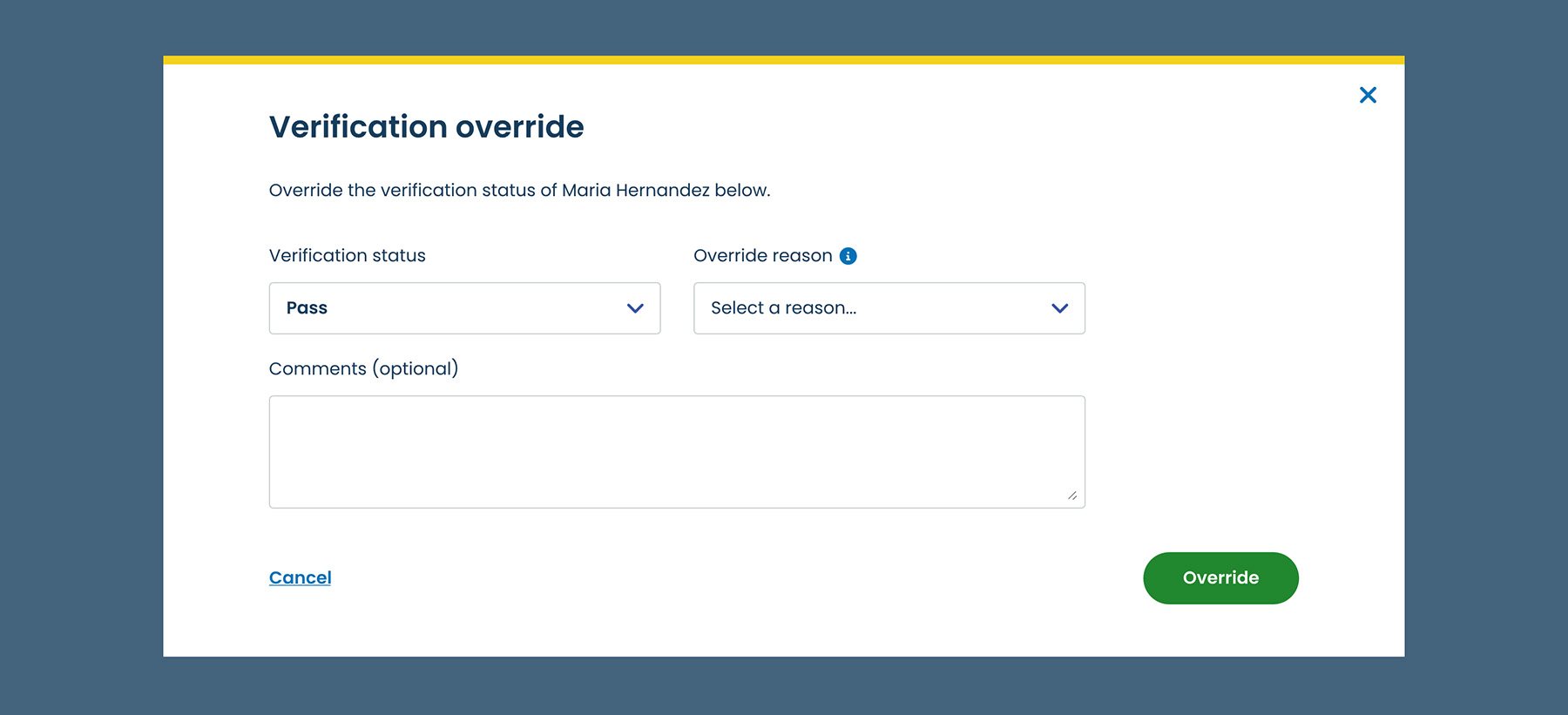
Overall, the research findings revealed a need for clearer on-screen guidance, more intuitive visual cues, and better support for edge cases.
NOTE: By this iteration, we had rolled out the new design system.
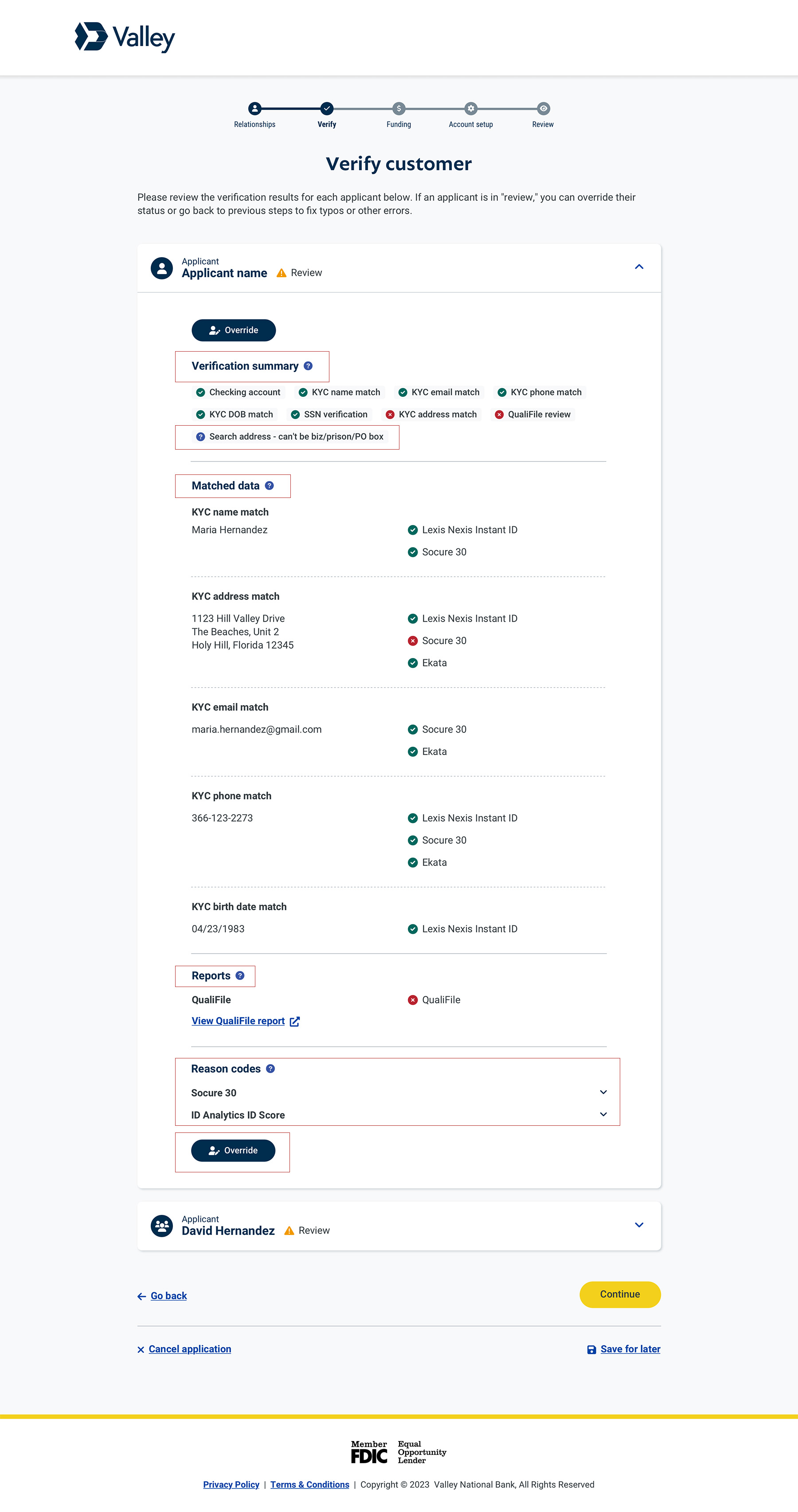
Since July 2024, 411 applications were returned with the QualiFile tag in a canceled, saved, abandoned, or expired state, among other errors. The Retail team provided direct feedback about persistent pain points and tasked us with addressing them by improving the interface. We learned that bankers mishandled applications requiring manual review, resulting in compliance issues and unhappy customers.
With a broader Experience Design team reporting to me by this time, I was still hands-on, but led UX Research and UX Design to improve and test a new solution.
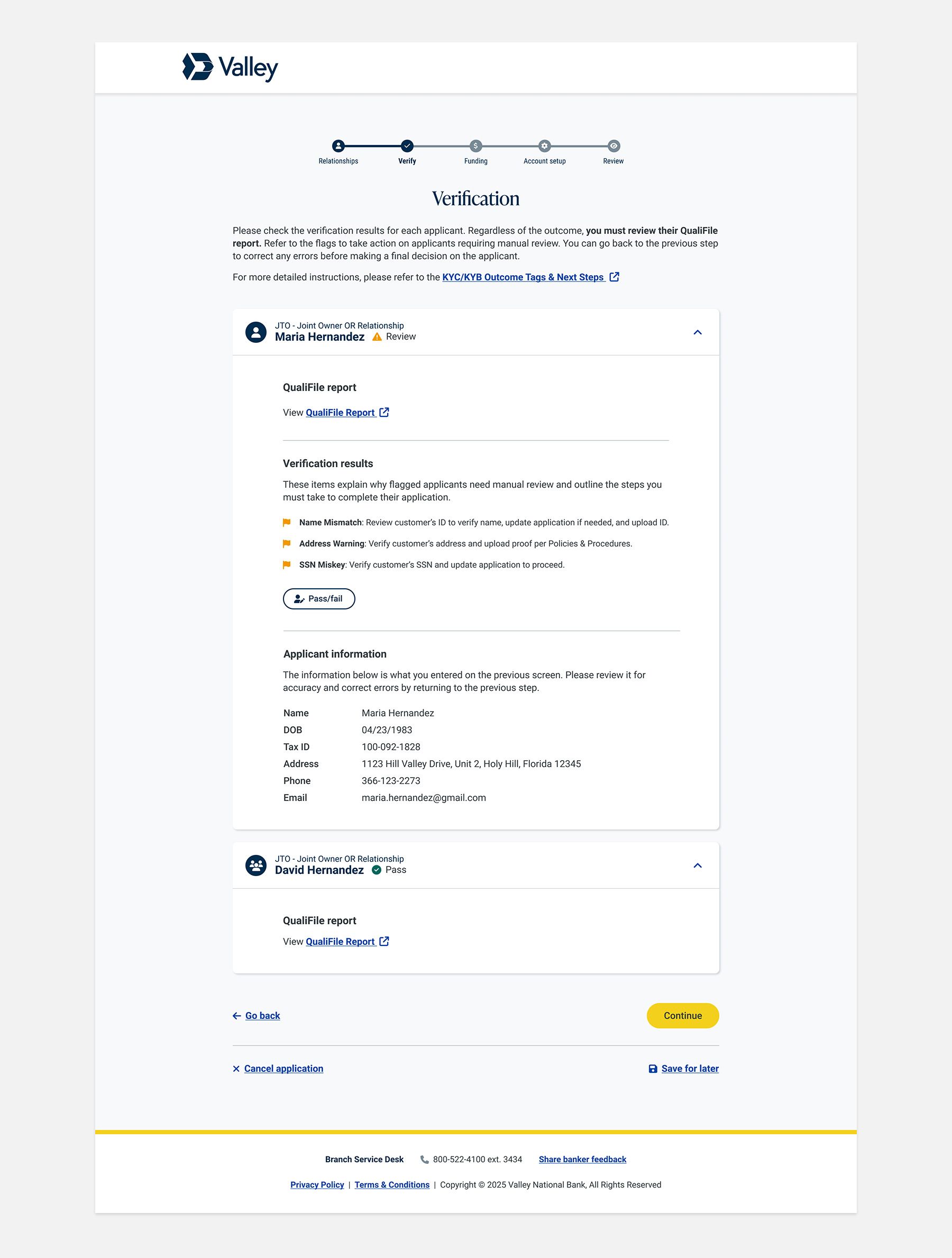
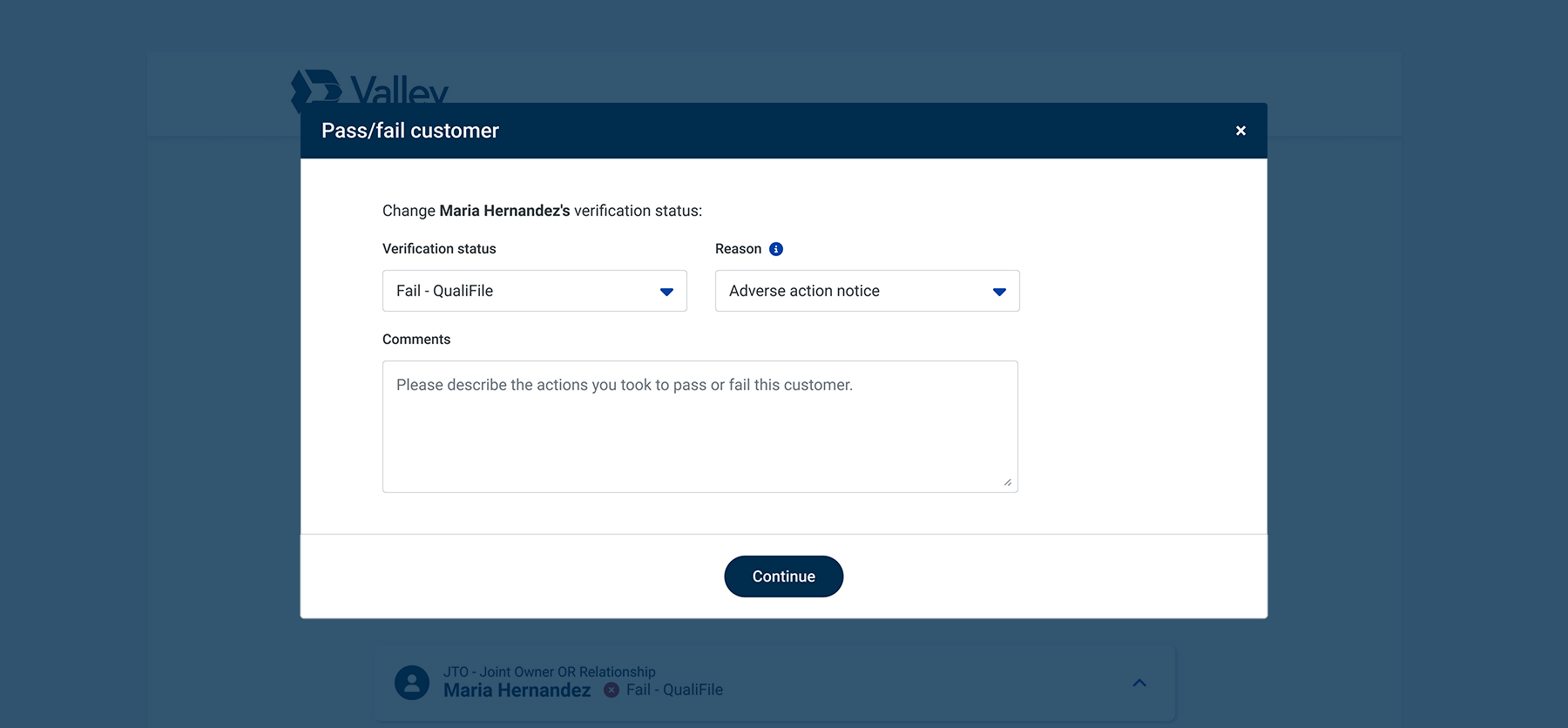
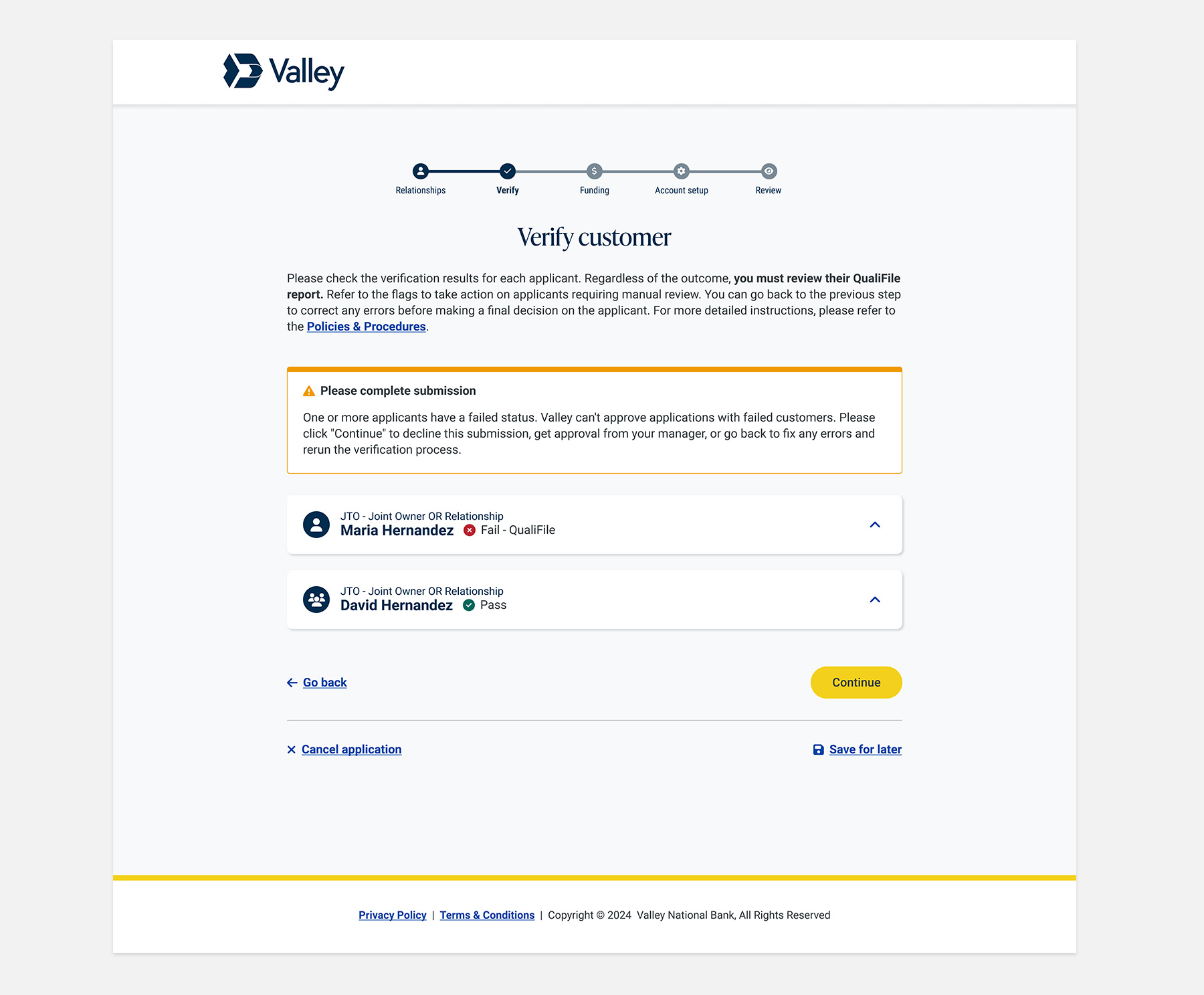
I led the UX research effort to conduct usability testing with branch employees who frequently appeared on the deficiency list. We also invited learning and development associates responsible for training bankers to participate.
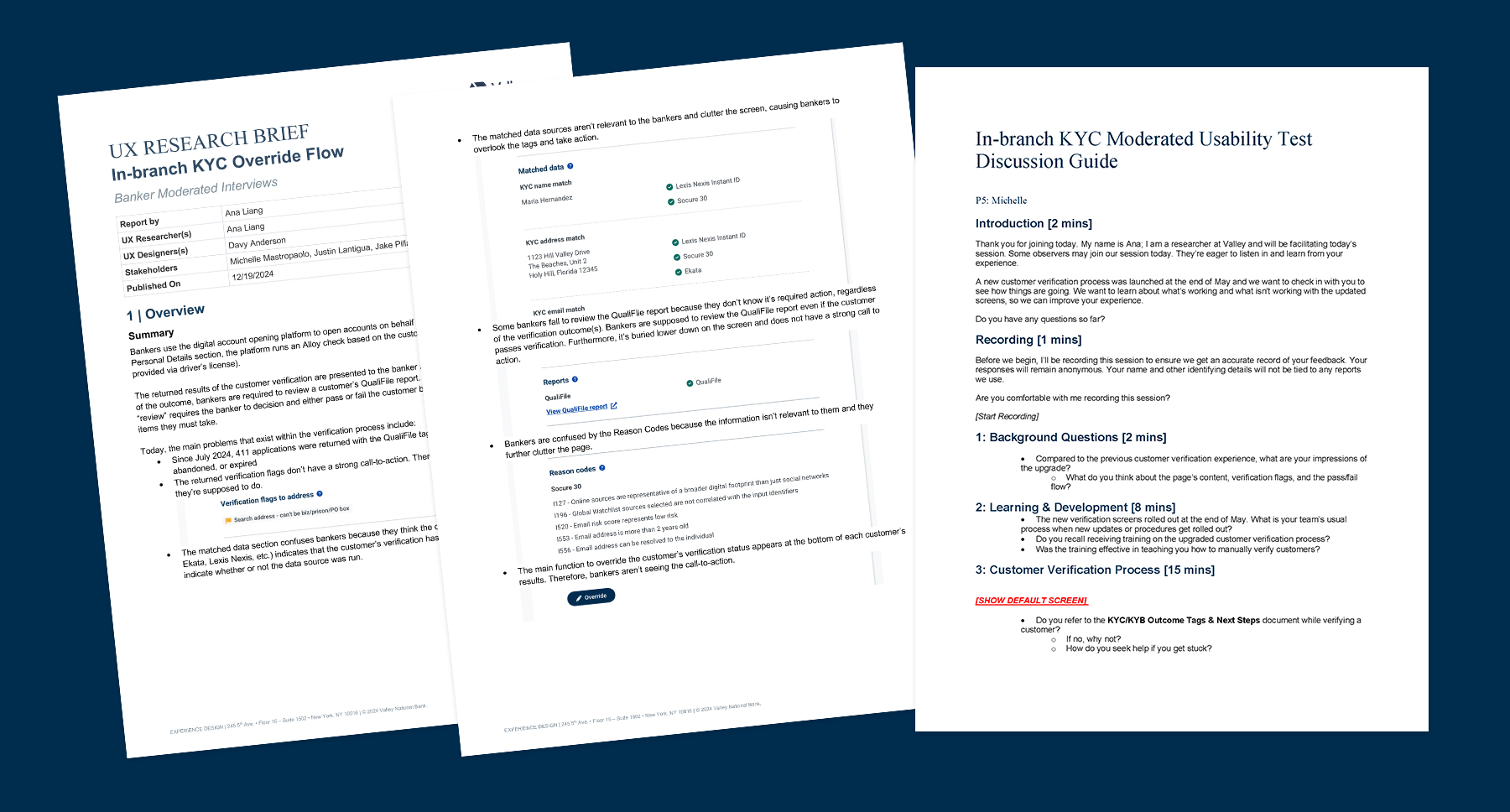
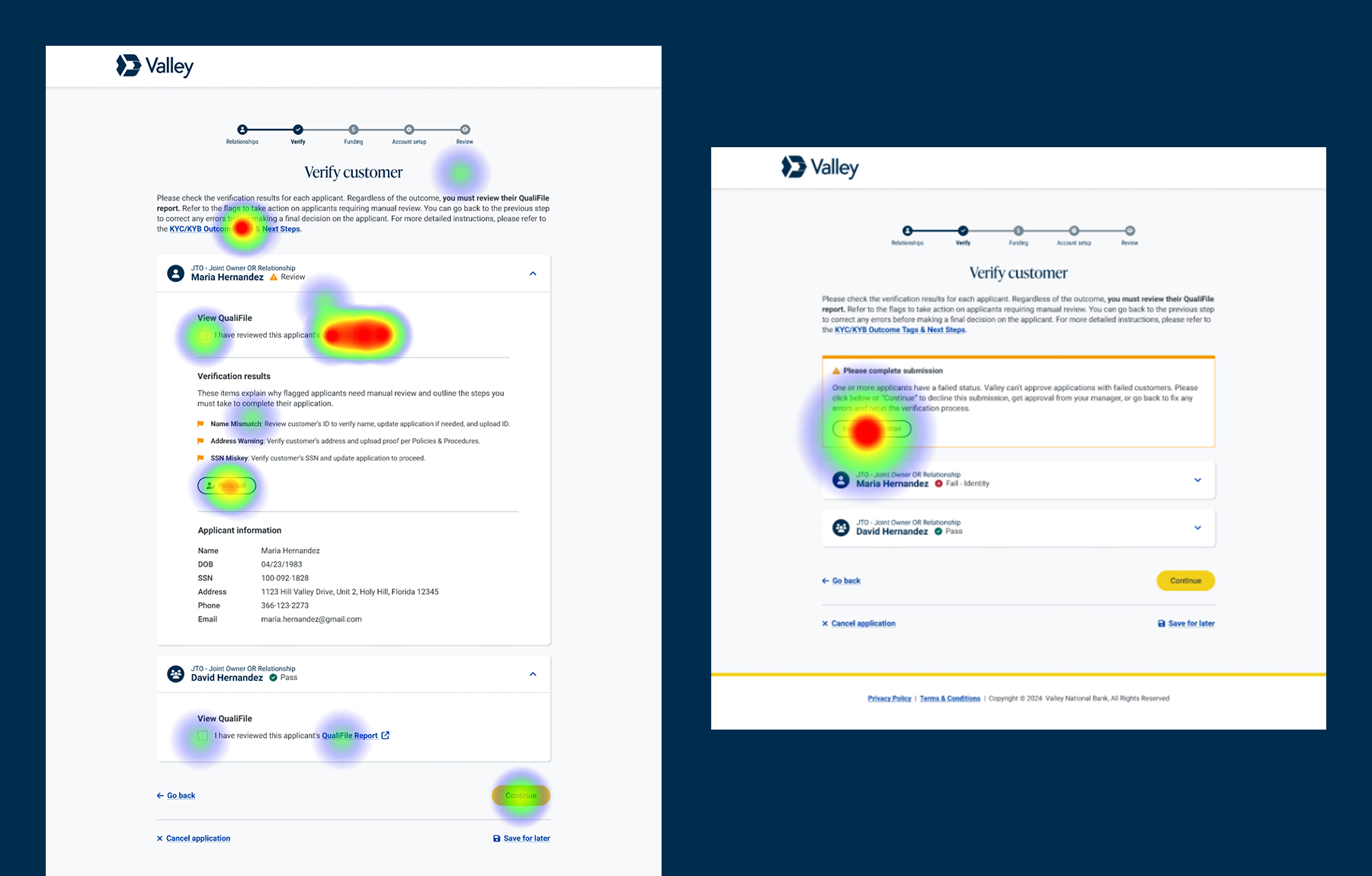
“The QualiFile report helps to determine if we can open the account for the client or not, and to see the previous history of the client's banking.”
— Participant 338140112
“I would like the opportunity to select more than one reason (we may be asking a lot for personal bankers to select the most appropriate reason, or the branch manager might disagree).”
— Participant 334086386
“The part where it said ‘click decline or click continue’ was a little confusing. I wasn't sure if clicking 'Continue' was just another way of declining, or if it meant I wanted an override from a supervisor.”
— Participant 337679316
“The flags seem clearer now, and I like that we can specify why the customer has failed.”
— Participant 337679316
“During the process, it would be great to be able to upload documents within the verification process, rather than after opening the account.”
— Participant 334628397
Overall, testers found the updated flow to be clearer and easier to understand, but there was still room for improvement to provide more step-by-step guidance, flexibility, and a clearer path to advance the application.
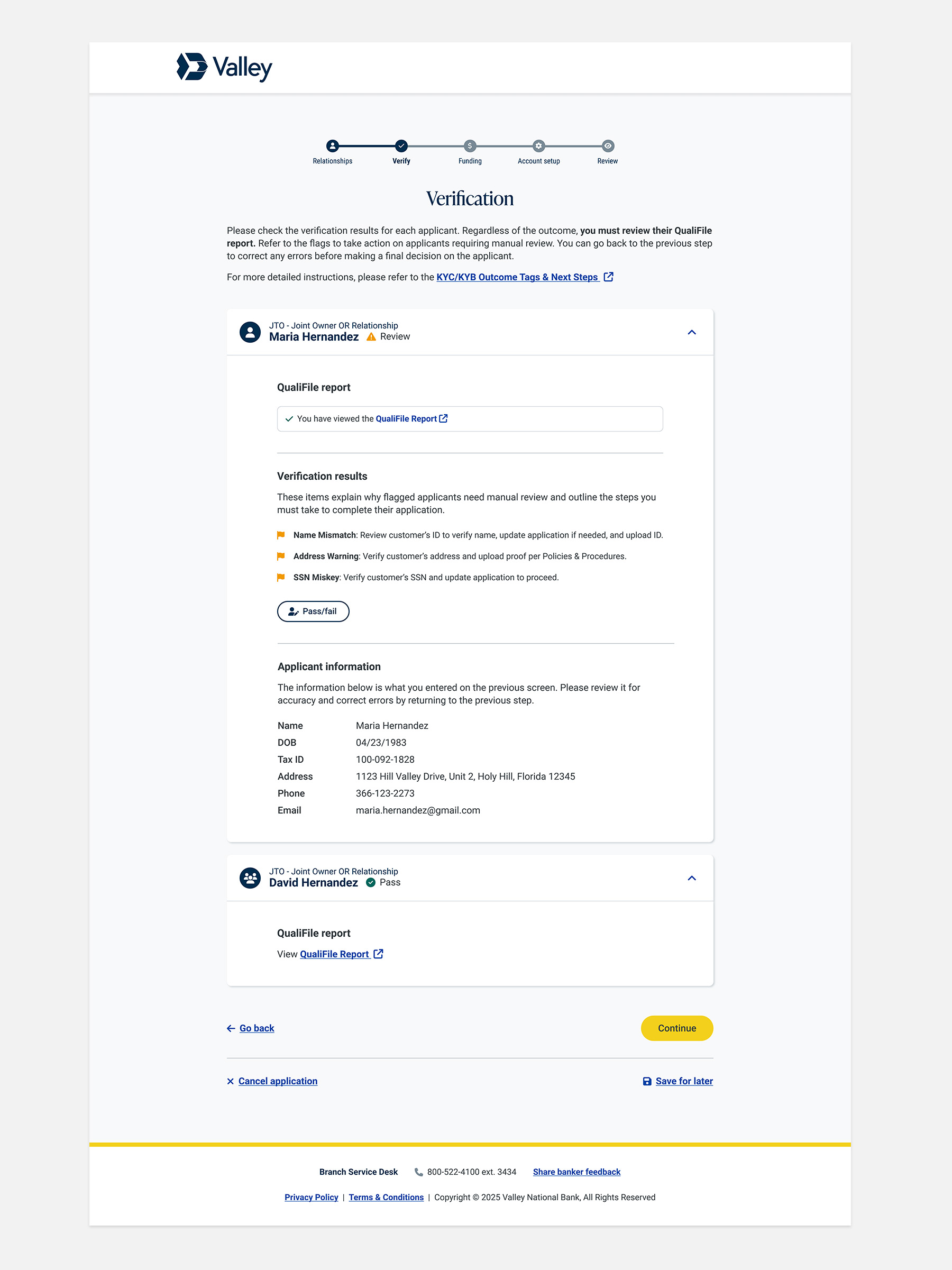
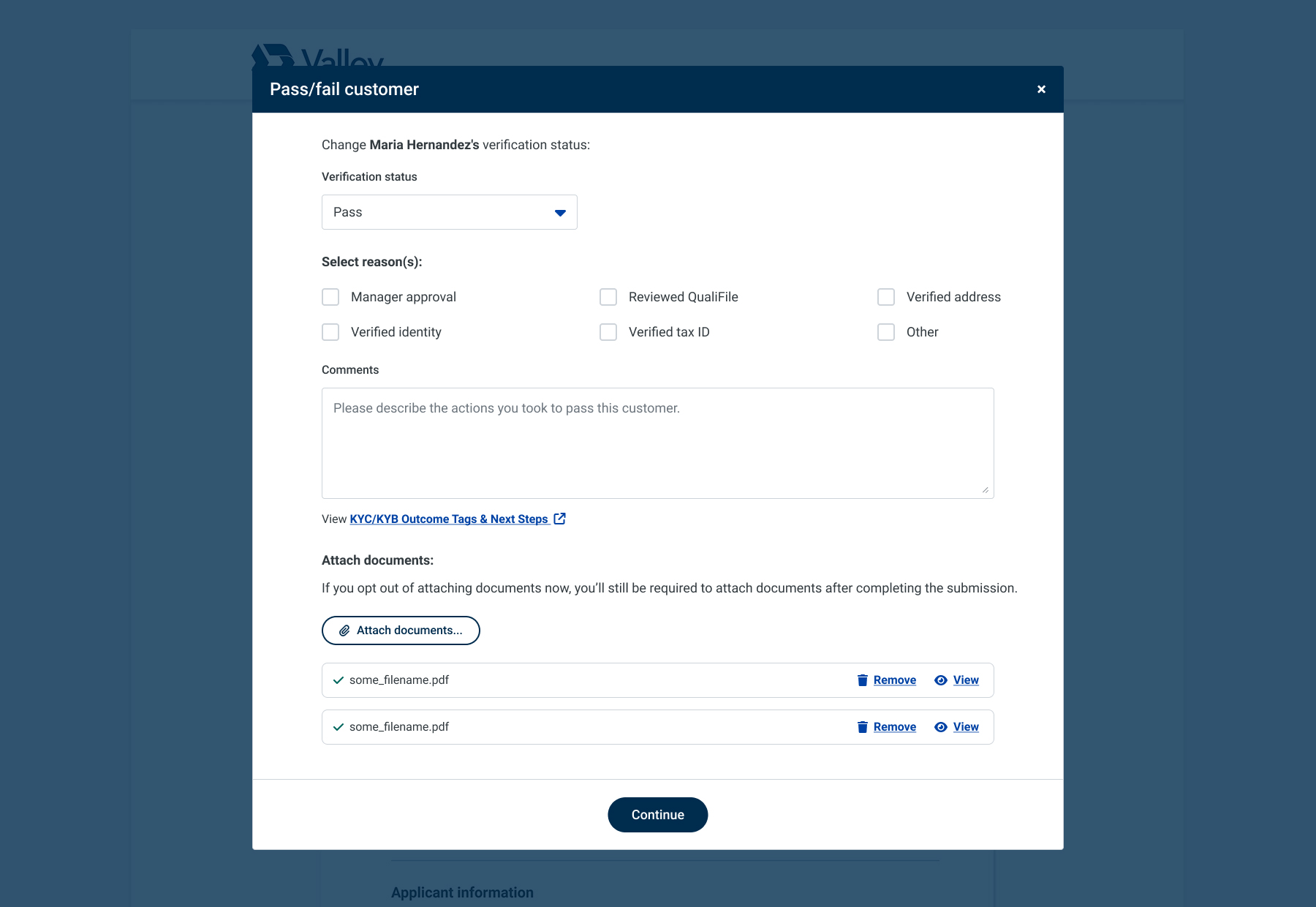
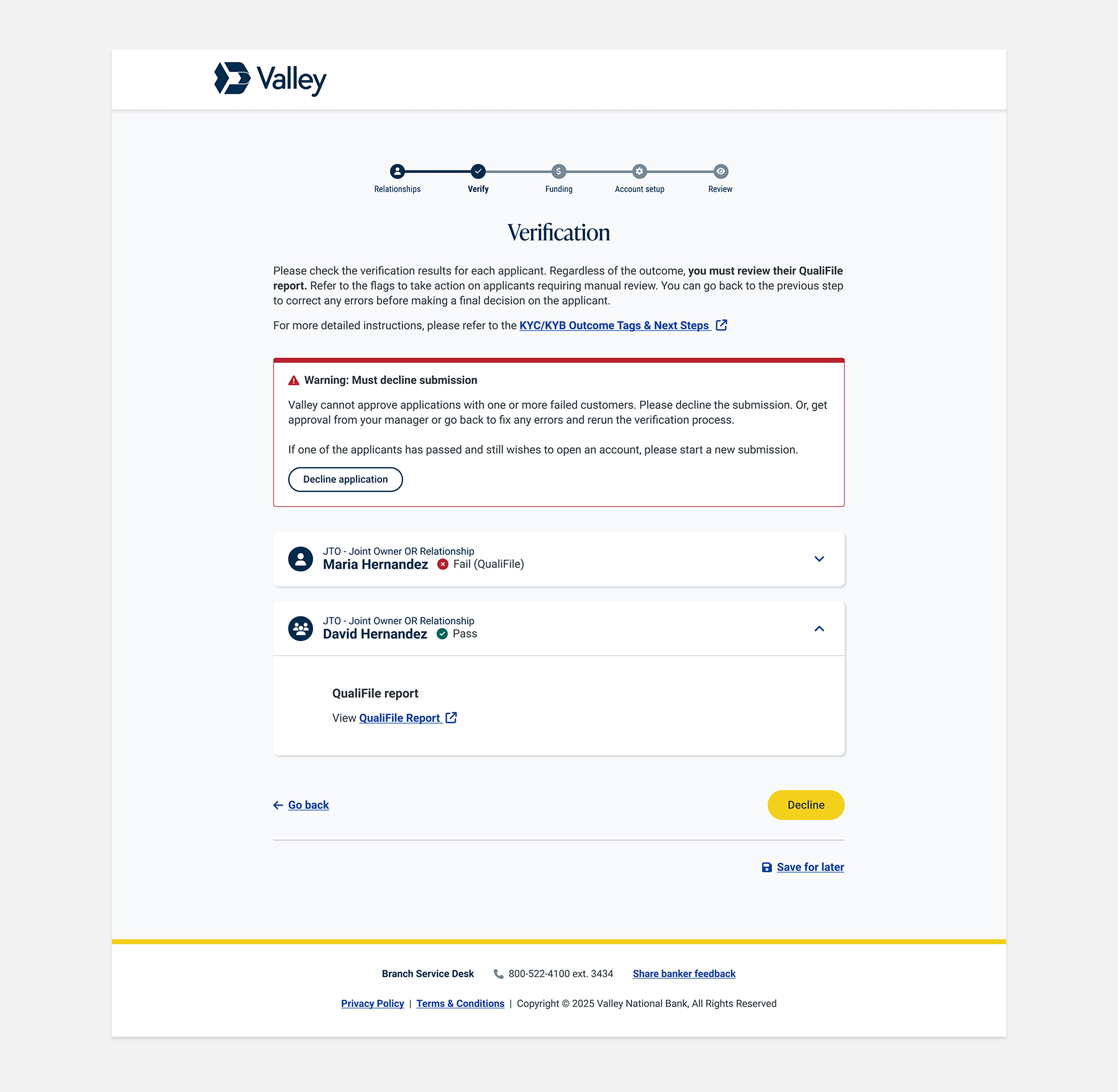
While we made improvements based on feedback from Retail and our studies, the data showed that bankers were actually mishandling more applications than before! How could this be possible? The question then was: why?
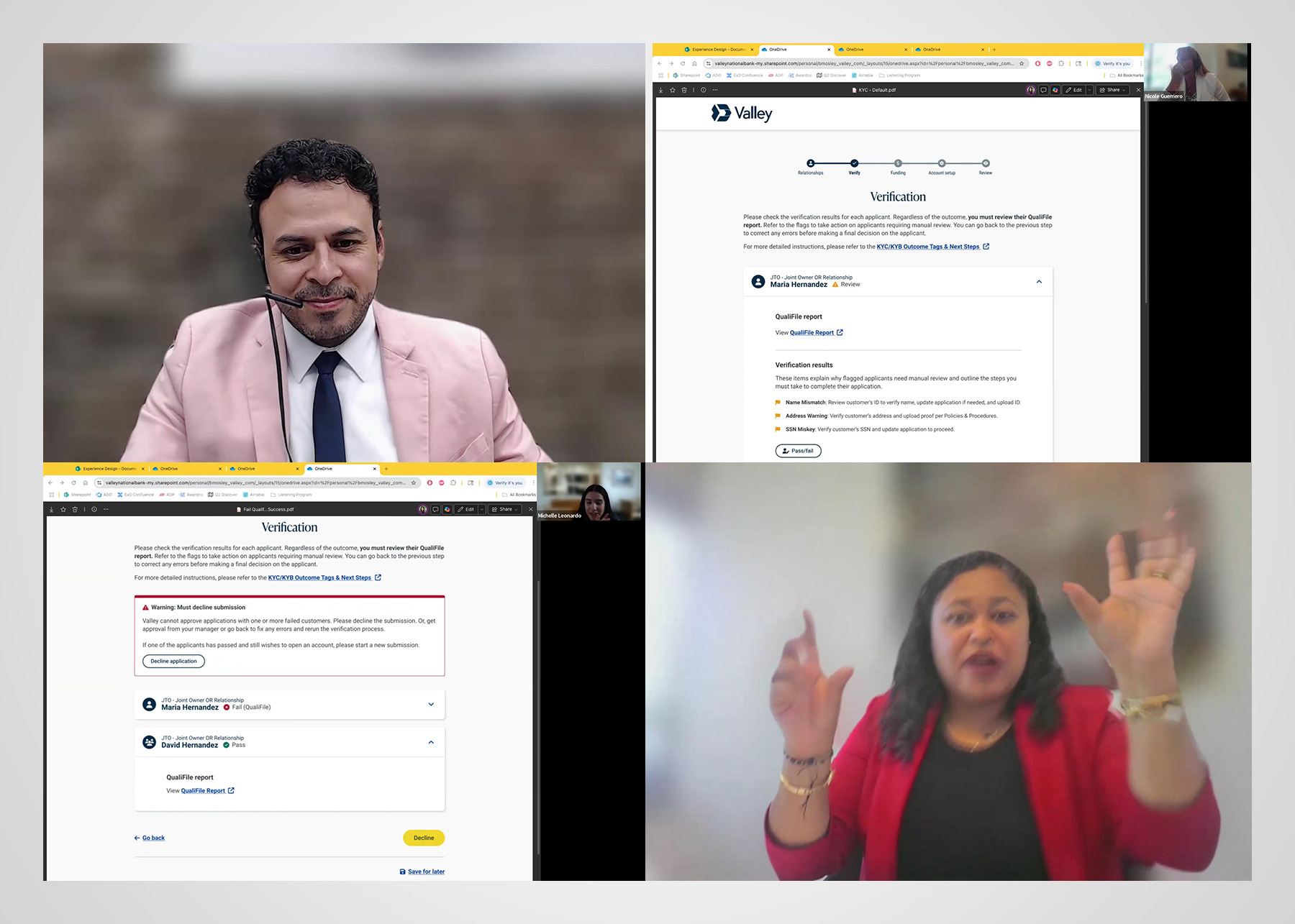
Despite the interface receiving very positive reviews, there was nothing further for UX Design to address. Our hypothesis is that bankers need better or more consistent training and improved support materials to guide them through the process.
We believe there are deeper challenges — such as incentives and operational motives — that contribute to why some bankers continue to open applications incorrectly.
We shared our findings with Retail and Learning & Development to help close those gaps.
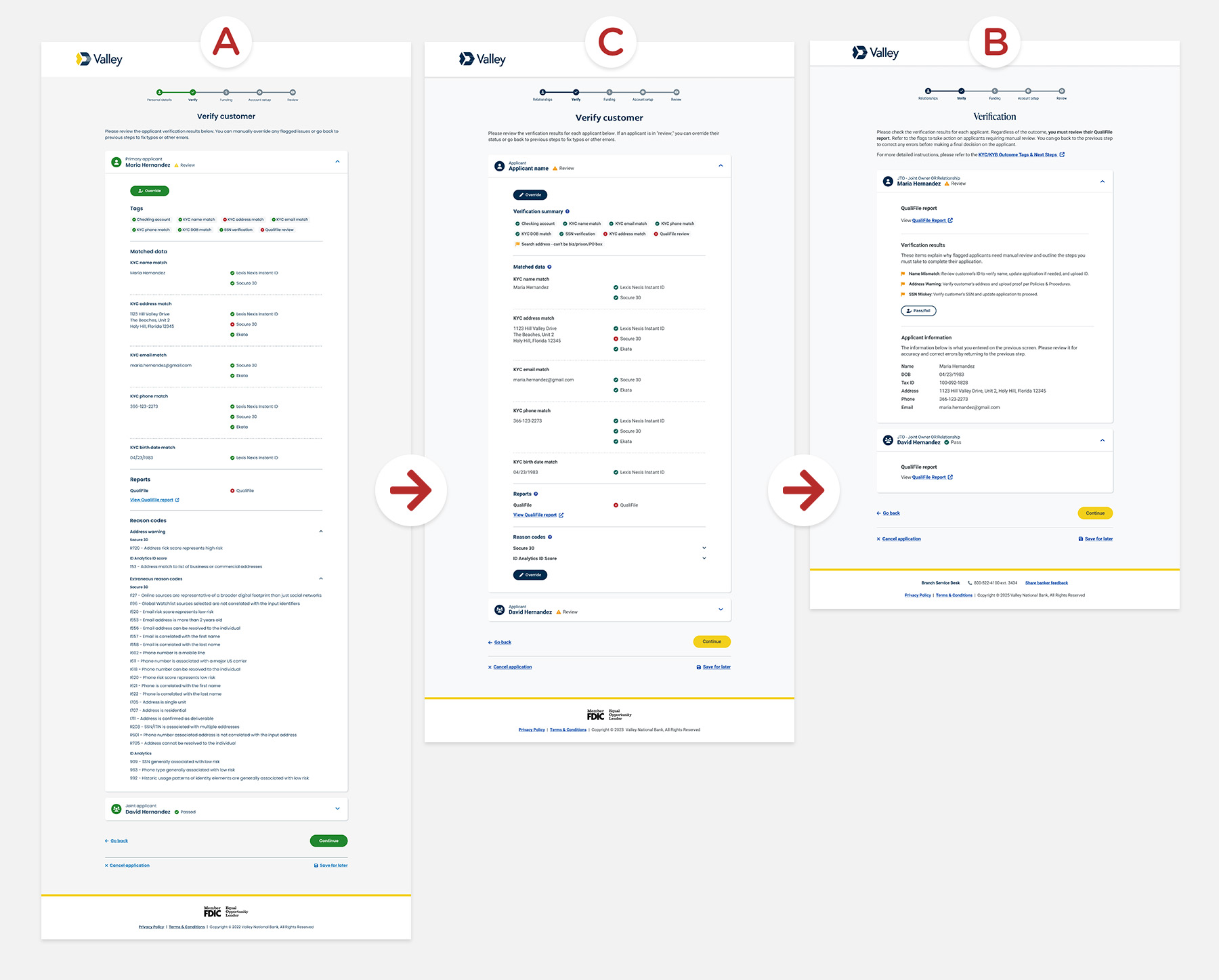
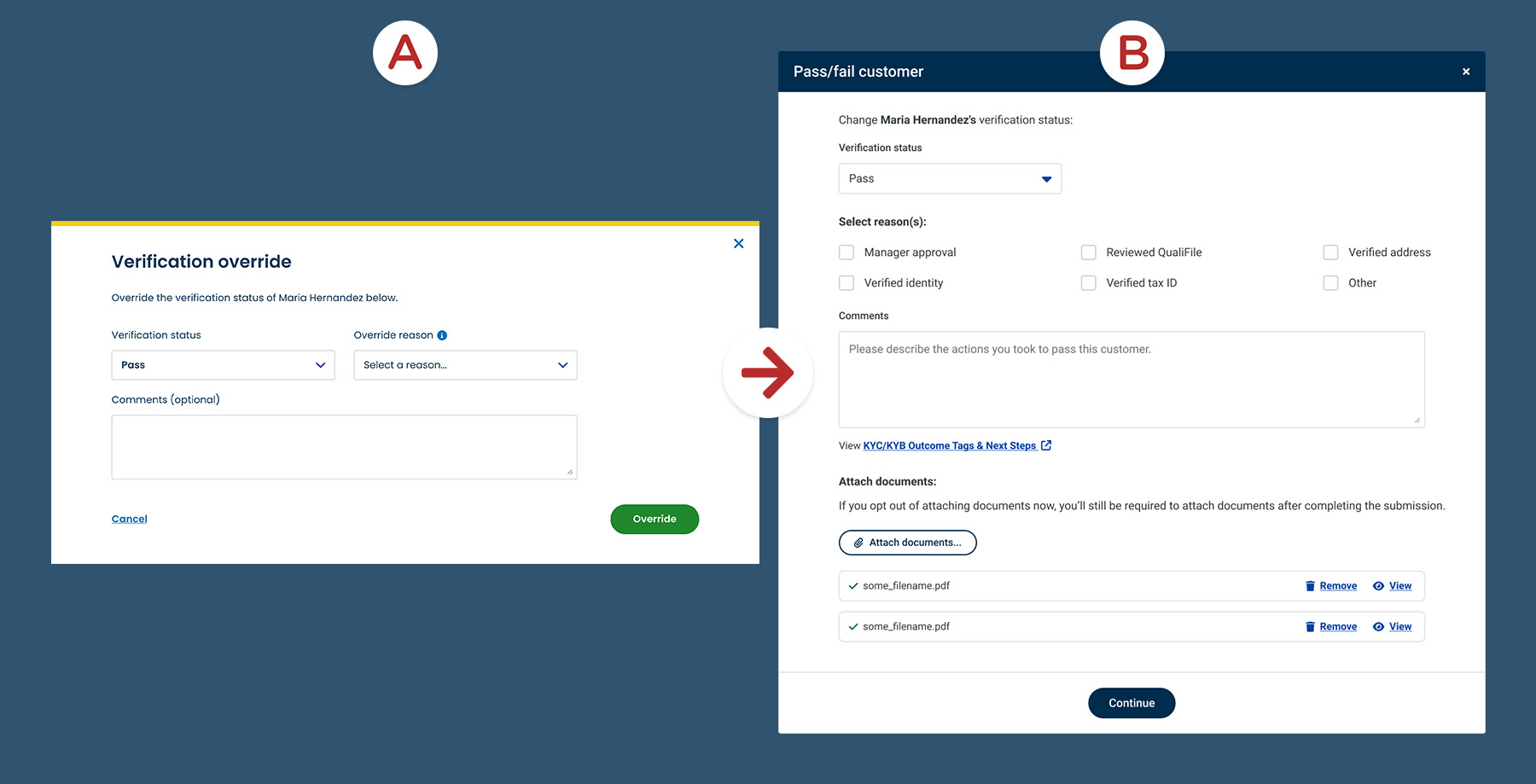
The team improved the banker experience through design, testing, and direct feedback from bankers. Each iteration improved in-branch workflows. As a result, daily tasks became easier, bankers grew more confident, and execution at the point of service became more consistent and compliant.
Customers now have smoother and more transparent in-branch experiences. These improvements strengthen trust and satisfaction during key financial moments.


